
Fall Fatigue Explained: Why Seasonal Changes Can Affect Your Energy and Daily Wellness

The transition from summer into fall can change more than the weather. Days become shorter, mornings may feel darker, schedules often shift, and routines built around summer travel, outdoor activities, or longer evenings may need adjusting.
For some people, these changes can coincide with feeling more tired, less motivated, or slower to get going. "Fall fatigue" is not a medical diagnosis, but it can describe the lower energy some people notice as the seasons change.
At Folium pX, we believe wellness is built through consistency. Sleep, movement, hydration, balanced nutrition, daylight exposure, and stress management all work together. Understanding how seasonal changes can influence these habits can make it easier to create a fall routine that supports steady energy without relying on extreme resets or quick fixes.
Key Takeaways
- Fall fatigue is an informal term for feeling more tired or less energetic as seasonal routines and daylight patterns change.
- Changes in natural light can influence the environmental cues that help regulate the body’s sleep and wake cycle.
- Consistent sleep, regular movement, balanced nutrition, hydration, and stress management can all support everyday energy.
- Small, sustainable changes to your routine can be more practical than extreme seasonal cleanses or complete lifestyle overhauls.
- Persistent or unexplained fatigue should not automatically be blamed on the season and may be worth discussing with a healthcare professional.
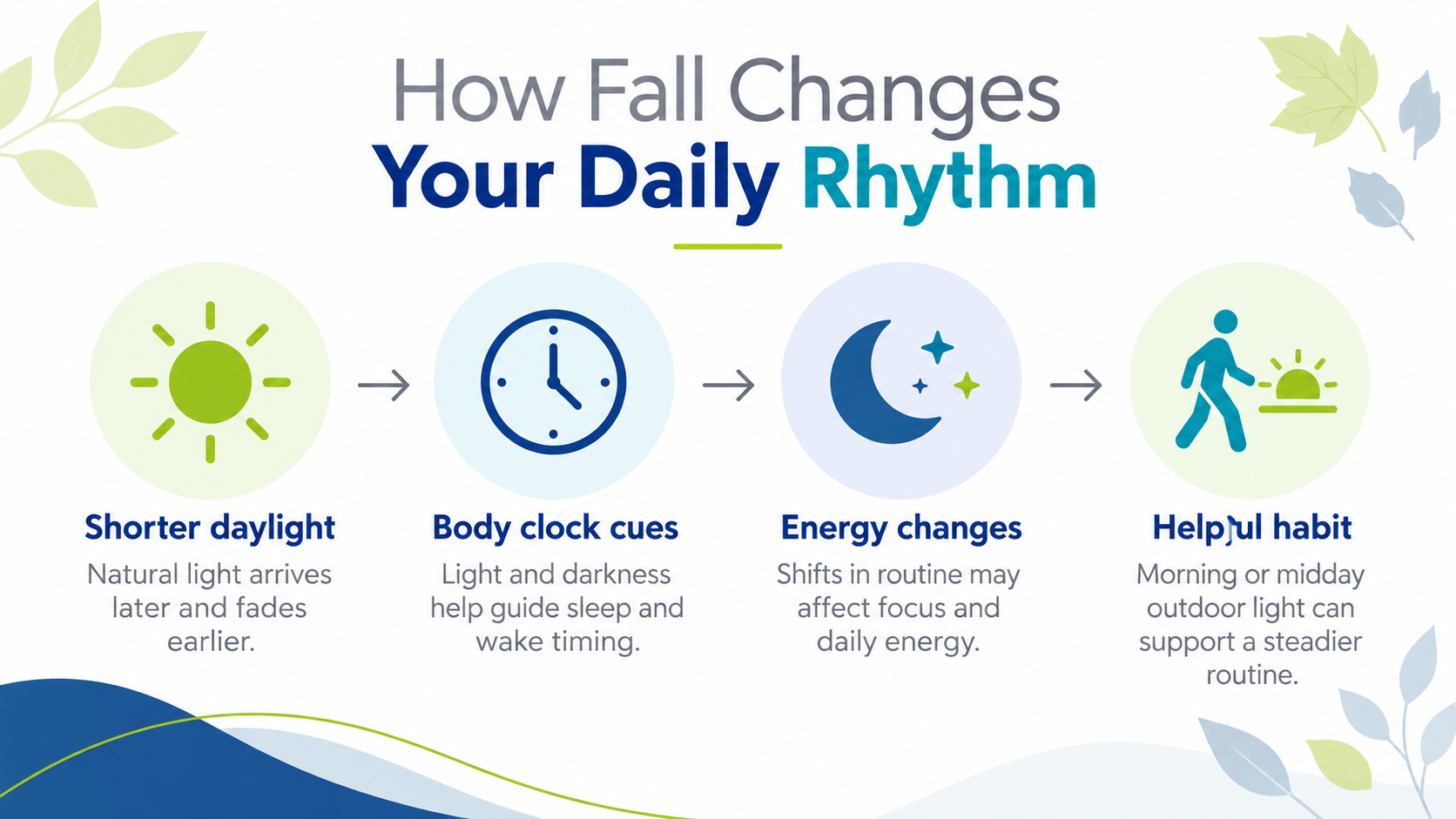
Did you know? Light and darkness are important environmental signals for your body clock, which is one reason your daily routine may feel different as daylight hours change.
What Do We Mean by "Fall Fatigue"?
Fatigue is generally described as tiredness, weariness, or a lack of energy. It can happen for many reasons, including poor sleep, emotional stress, illness, medication effects, changes in activity, and other physical or mental health factors.
That is why it is important not to assume that every energy dip in September, October, or November is automatically caused by the season.
For some people, however, fall can bring several changes at once. The amount of daylight changes, schedules may become more structured, outdoor activity can shift, and sleep routines may need adjustment. When several factors change together, a person may notice that their usual energy feels different.
Possible experiences can include:
- Feeling slower in the morning
- Wanting more sleep than usual
- Difficulty concentrating
- Lower motivation for exercise or daily tasks
- Afternoon tiredness
- Feeling mentally drained after a busy day
Seasonal affective disorder, or SAD, is different. It is a form of depression with a recurring seasonal pattern. Feeling more tired as fall begins does not mean someone has SAD, and ongoing changes in mood, sleep, appetite, or daily functioning deserve professional attention.
Changing Daylight and Your Body Clock
One of the clearest seasonal changes in fall is daylight. The body has an internal timing system known as the circadian rhythm, which helps regulate when we feel awake and when we begin to feel sleepy.
Light and darkness are important environmental cues for this system. As daylight hours change, the timing of natural light exposure may change too. Someone who woke to bright sunlight during summer, for example, may find that the same wake-up time is much darker in fall.
That does not mean shorter days automatically cause fatigue. It does mean that light exposure is one part of the daily rhythm that can change with the season.
Make Morning and Daytime Light Part of Your Routine
A simple approach is to make use of natural daylight when possible.
You might:
- Open curtains or blinds soon after waking
- Step outside for a short morning walk
- Take a lunchtime walk when your schedule allows
- Sit near natural light during breakfast or morning work
- Pair outdoor time with another habit, such as walking the dog
Natural light is not a cure for fatigue, but it can be one useful part of a healthy sleep and wake routine.
Your Sleep Routine Can Influence Daytime Energy
Sleep is one of the first places to look when daytime energy changes. Most adults need at least seven hours of sleep each night, although individual needs vary.
A consistent schedule also matters. Going to sleep and waking at very different times throughout the week can make a predictable routine harder to maintain.
Fall can be a useful time to review evening habits, particularly if summer involved travel, late nights, or irregular weekends. Our guide to Vacation Recovery: How to Restore Your Wellness Routine After Travel, Late Nights, and Indulgent Meals explores how a gradual return to routine can support overall wellness after disruption.
A Simple Fall Sleep Checklist
- Keep your wake time reasonably consistent
- Give yourself enough time for sleep
- Get natural light during the day
- Reduce bright screens close to bedtime
- Keep your bedroom dark, quiet, and comfortable
- Create a short wind-down routine you can repeat
The goal is not perfection. A routine that works most nights is more realistic than one that depends on ideal conditions every day.
Movement and Daytime Well-Being
Seasonal changes can affect when and how people move. A walk that was easy to fit in during a bright summer evening may become less convenient after sunset, while colder or wetter weather can change outdoor plans.
If your usual activity level drops, look for practical ways to keep movement in your day. Regular physical activity supports general health and can also support better sleep.
Options can include:
- A short walk in daylight
- Strength training a few times per week
- Stretching or mobility work at home
- Breaking up long periods of sitting
- Keeping an indoor exercise option for poor-weather days
At Folium pX, we often emphasize consistency over extremes. The same principle applies here. A realistic routine that you repeat is more useful than an ambitious plan that disappears after a week.
For more ideas, read Daily Detox Habits: Small Lifestyle Changes That Reduce Toxic Load Over Time.
Nutrition and Hydration Still Matter When the Season Changes
Food and hydration remain important parts of a steady energy routine.
Balanced meals can include a mix of protein, fiber-rich carbohydrates, fruits, vegetables, and healthy fats. Fall foods such as apples, pears, squash, pumpkin, leafy greens, sweet potatoes, nuts, and seeds can add variety to meals.
Hydration needs vary from person to person based on factors such as activity, climate, age, and health. Water remains a simple foundation, while foods with a high water content can also contribute to total fluid intake.
Our article on Summer Hydration Beyond Water: How Antioxidant-Rich Foods Support Energy and Cellular Health explains how water-rich foods, minerals, and balanced meals can support a broader hydration routine. The same principles can carry into fall.
A Practical Fall Wellness Guide
| Wellness Factor | What May Change in Fall | Practical Habit to Try |
|---|---|---|
| Daylight | Less natural light at familiar times | Get outside earlier in the day when possible |
| Sleep | Bedtime or wake-up routines may shift | Keep sleep and wake times reasonably consistent |
| Movement | Outdoor activity may become less convenient | Plan a daytime walk or indoor backup activity |
| Hydration | Water may be less top of mind | Keep water nearby and drink regularly |
| Nutrition | Busy schedules may disrupt meals | Build balanced meals around simple whole foods |
| Stress | Work, school, or family routines may intensify | Protect short periods of downtime and recovery |
Not everyone experiences the same seasonal changes. Instead, use the table to identify which parts of your own routine could benefit from more attention.
Stress, Routine Changes, and Fatigue
Fatigue is not always purely physical. Emotional stress can leave people feeling mentally and physically depleted, especially when sleep and recovery are also affected.
For some people, fall means returning to a busier work rhythm. For others, it can involve school schedules, family commitments, or more time indoors. None of these changes are automatically unhealthy, but a crowded routine can leave less room for sleep, movement, meal preparation, and relaxation.
A few simple strategies may help:
- Leave some unscheduled time in your week
- Take short breaks during long work periods
- Continue hobbies and social activities you enjoy
- Spend time outdoors when practical
- Avoid using caffeine as the only response to persistent tiredness
- Build a predictable evening routine
Sometimes the best seasonal reset is simply adding more structure around the habits that already help you feel well.
A Simple Fall Energy Reset
A seasonal reset does not need restriction, extreme detoxification, or a complete lifestyle overhaul. A few repeatable habits can create a more stable foundation.
Morning
Wake at roughly the same time each day and open your curtains or blinds. Get some natural light when possible and drink water as you begin your morning.
If you eat breakfast, choose something that fits into an overall balanced eating pattern rather than relying only on coffee or a sugary snack to get started.
During the Day
Keep moving. If you work at a desk, stand up periodically or take a short walk. Eat balanced meals and keep fluids accessible.
When practical, spend some time outdoors. Pairing a short walk with lunch, a phone call, or another daily task can make the habit easier to maintain.
Evening
Give yourself a clear transition from activity to rest. Reduce bright screens close to bedtime, avoid making late caffeine a regular habit, and create a short wind-down pattern that signals the end of the day.
You do not need to change everything at once. Pick two or three habits that are realistic enough to repeat for a week, then build from there.
Antioxidants as Part of a Broader Fall Wellness Routine
Antioxidants are an important part of the Folium pX wellness philosophy, but they are only one part of a broader approach.
A varied diet containing fruits, vegetables, nuts, seeds, and other plant foods can provide naturally occurring antioxidant compounds. At the same time, sleep, movement, hydration, balanced nutrition, and appropriate recovery continue to matter.
We explore antioxidants and seasonal wellness in greater detail in Antioxidants for Fall: Supporting Your Body's Natural Defenses Against Seasonal Changes.
Where Folium pX Fits
Folium pX is our plant-based supplement formulated with pine bark, grape-seed extracts, flowers, and other natural ingredients. We position Folium pX as part of an antioxidant and immune-support wellness routine.
Supplements should complement healthy daily habits rather than replace them. Sleep, nutritious food, regular movement, hydration, and appropriate medical care remain important parts of overall wellness.
Readers who want to learn more about the formula and current usage guidance can visit the Folium pX Immune Support Booster Supplement page.
Supporting Relaxation and a Consistent Evening Routine
A calmer evening routine can make it easier to move from a busy day toward rest.
Folium Relax is part of the Folium pX range and is formulated by the company to support sleep, calm, relaxation, mood, and stress relief. Its listed ingredients include valerian root.
It can be considered alongside healthy evening habits such as reducing late-night screen use, keeping a reasonably consistent bedtime, and allowing enough time to unwind.
For current product information, visit Folium Relax: Sleep Supplement Support & Relaxation.
Folium Relax should not be viewed as a treatment for seasonal affective disorder, depression, insomnia, or unexplained chronic fatigue. Anyone experiencing ongoing sleep or mood concerns should discuss them with a qualified healthcare professional.
When Tiredness Deserves More Attention
Feeling tired for a few days following a schedule change is different from fatigue that continues for weeks or interferes with everyday life.
Fatigue can have many causes, including lack of sleep, stress, anemia, thyroid conditions, infections, sleep disorders, depression, anxiety, medication effects, and other health conditions.
Consider speaking with a healthcare professional if fatigue:
- Persists for several weeks
- Continues to get worse
- Interferes with work or normal daily activities
- Continues despite adequate rest
- Comes with unexplained physical symptoms
- Occurs alongside significant or persistent mood changes
Recurring seasonal depression symptoms should also be taken seriously. Seasonal affective disorder is a form of depression with a recurring seasonal pattern, not simply another name for feeling tired when the weather changes.
Build a Routine That Works With the Season
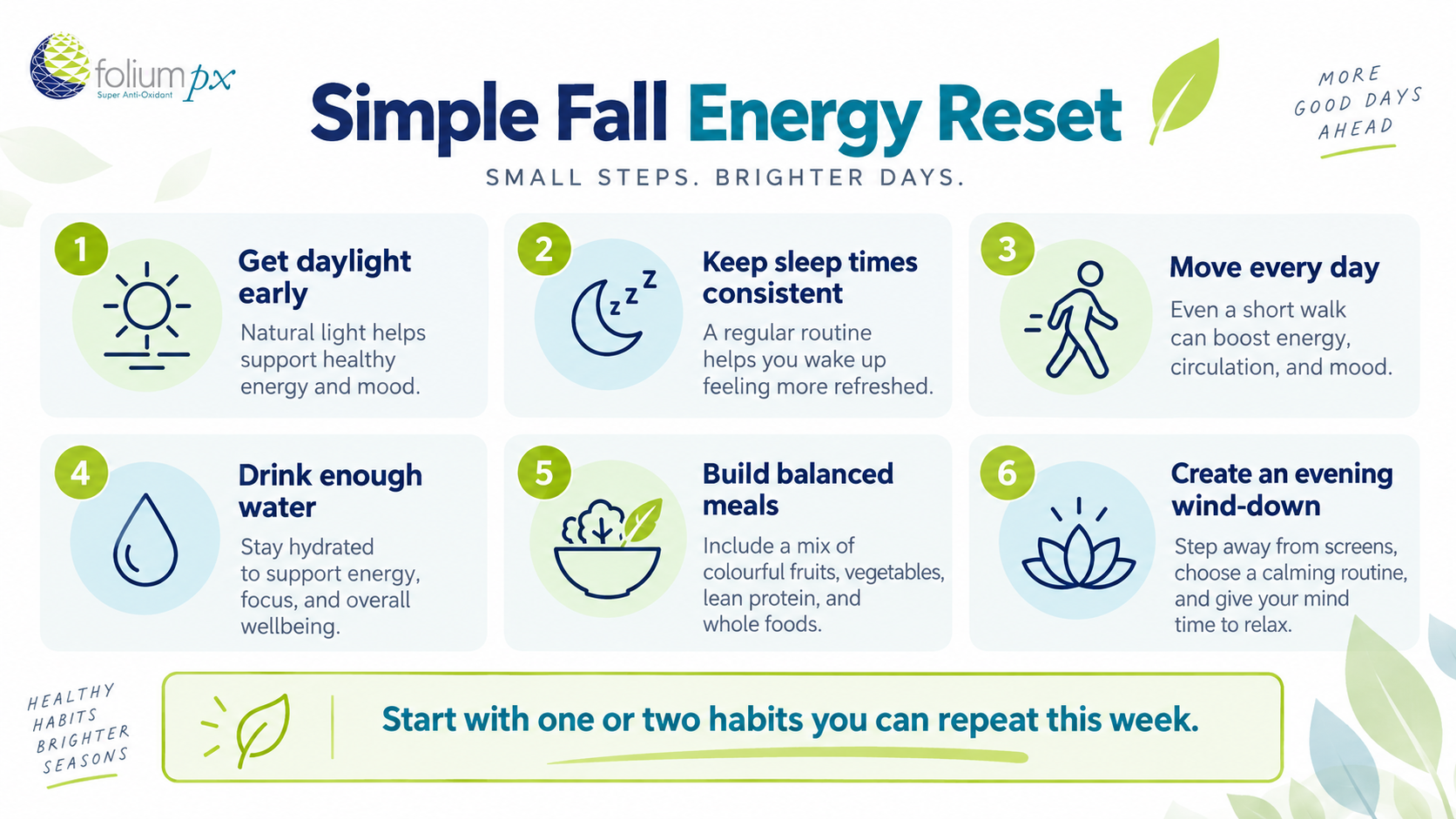
Fall can be an opportunity to check in with the habits that support everyday energy.
Changing daylight may alter the timing of your daily routine. Sleep schedules may need adjustment. Movement can become less convenient. Stress may increase when schedules change. Nutrition and hydration can also become easier to overlook when life gets busy.
The answer does not have to be a dramatic cleanse or a perfect wellness plan.
Start with the basics. Give yourself enough time for sleep, seek natural light during the day, move regularly, eat balanced meals, stay hydrated, and leave room to recover from stress. Then build additional wellness practices around that foundation.
At Folium pX, we believe long-term wellness is supported by consistent choices made over time. If you are looking for additional support to complement your daily wellness routine, you can explore the full Folium pX shop.


