
Vacation Recovery: How to Restore Your Wellness Routine After Travel, Late Nights, and Indulgent Meals

Vacations give us space to rest, explore, celebrate, and spend time with people we care about. They can also interrupt the habits that normally help us feel our best.
After several days of restaurant meals, later bedtimes, long flights, extra drinks, or a different exercise schedule, you may return home feeling tired, bloated, sluggish, or disconnected from your usual routine. That does not mean you have undone your progress. It simply means your body and daily schedule may need time to readjust.
A healthy vacation recovery plan is not about punishment. It does not require skipping meals, forcing intense workouts, or starting an extreme cleanse. The most useful approach is usually a steady return to hydration, balanced meals, consistent sleep, comfortable movement, digestive support, and manageable daily structure.
At Folium pX, we believe wellness works best when supportive habits are practical enough to repeat. Supplements can be part of that routine, but they should complement nutritious food, hydration, rest, movement, and appropriate medical care.
Here is a realistic way to restore your wellness rhythm after travel.
Key Takeaways
- Vacation recovery should focus on restoring supportive habits, not punishing yourself for enjoying travel, late nights, or indulgent meals.
- Steady hydration, balanced meals, gradual fiber intake, and regular movement can help you return to your normal wellness rhythm.
- A consistent wake time, daylight exposure, and a calming evening routine can support your return to a regular sleep schedule.
- Restart exercise according to your current energy, hydration, soreness, and sleep rather than trying to compensate with an extreme workout.
- Supplements can complement an established wellness routine, but they should not replace nutritious food, hydration, movement, sleep, or medical care.
Did you know? Choosing just two or three anchor habits on your first day home may make your vacation recovery routine easier to maintain. Which habit helps you feel grounded after travel?
Why You May Feel Out of Balance After a Vacation
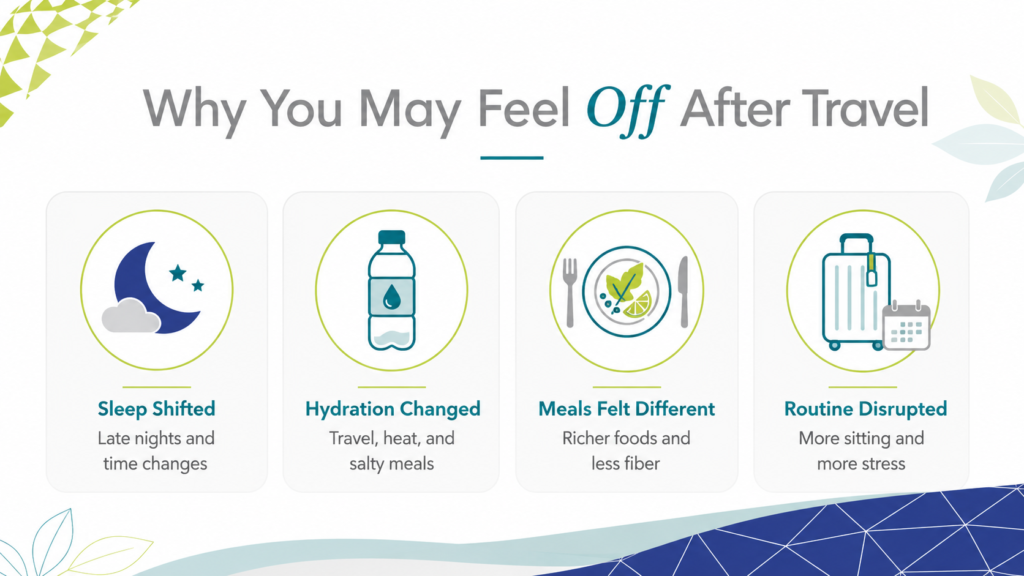
Post-vacation fatigue is rarely caused by one meal or one late night. Several routine changes may be happening at the same time.
Your sleep schedule changed
Travel can involve early departures, overnight flights, late dinners, unfamiliar beds, and time-zone changes. Even without jet lag, going to sleep and waking later than usual may shift your normal sleep schedule.
Once you return home, your body may need several nights of consistency before bedtime and morning energy begin to feel familiar again.
Your hydration habits became less consistent
It is easy to forget about water while navigating airports, sightseeing, attending events, or spending hours in a car. Hot weather, increased sweating, alcohol, caffeine, and salty restaurant meals may also affect how you feel.
This does not mean every traveler returns home dehydrated. It does mean that returning to regular fluid intake is a sensible first step.
Your meals looked different
Vacation eating often involves:
- Larger or richer meals
- More restaurant and packaged food
- Different meal times
- Fewer vegetables or whole grains
- More alcohol or sweetened drinks
- Less dietary fiber than usual
These changes may temporarily affect appetite, energy, bowel regularity, and digestive comfort.
Your movement pattern changed
Some vacations involve long periods of sitting in airplanes, trains, buses, or cars. Other trips include far more walking than usual.
Either pattern can leave you feeling stiff, sore, or fatigued when you return.
Your responsibilities returned all at once
The transition home can create its own stress. Unpacking, laundry, grocery shopping, email, work, school schedules, and household tasks can quickly replace the slower pace of a trip.
A recovery routine should therefore support both physical and mental well-being.
Three Principles for a Realistic Post-Vacation Reset
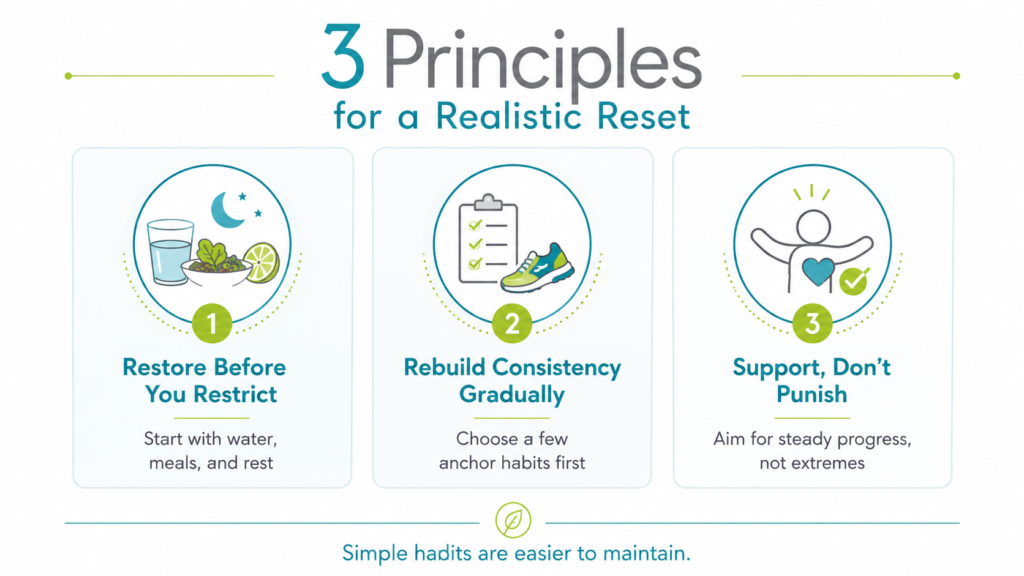
Before building a recovery plan, it helps to establish a healthier mindset.
1. Restore before you restrict
After several indulgent meals, you may feel tempted to skip breakfast, eliminate entire food groups, or dramatically reduce calories. That approach can make it harder to return to a predictable eating routine.
Begin by restoring the basics:
- Regular meals
- Adequate fluids
- A consistent wake time
- Comfortable movement
- A reasonable bedtime
The goal is not to repay a debt created by vacation food. The goal is to give your body the resources and structure it needs.
2. Rebuild consistency gradually
Trying to fix every habit on the first day home can become another source of stress. Choose a few anchor habits that make the rest of your routine easier.
Good options include:
- Drinking water after waking
- Eating a balanced first meal
- Taking a daily walk
- Going to bed at a consistent time
- Preparing food for the following day
Once these habits feel stable, you can add more.
3. Support your body instead of punishing it
Wellness includes flexibility. It can include celebrations, desserts, restaurant meals, rest days, travel, and spontaneous experiences.
A supportive reset focuses on what you can add back into your routine rather than what you must remove. Folium pX explores this same practical approach in our guide to creating a non-punishing seasonal wellness reset.
A Seven-Step Vacation Recovery Plan
Step 1: Return to steady hydration
Begin drinking fluids regularly throughout the day. There is no need to consume a very large amount at once.
A simple hydration routine might include:
- A glass of water after waking
- Water with meals
- A reusable bottle at your desk or in your bag
- Water before and after exercise
- Water-rich foods such as cucumber, citrus, melon, berries, and leafy greens
Your fluid needs depend on factors such as climate, physical activity, medications, diet, and overall health.
Electrolytes are electrically charged minerals, including sodium, potassium, magnesium, calcium, and chloride. They help support fluid balance and normal nerve and muscle function. Electrolyte products may be useful in certain situations involving substantial sweating, vomiting, diarrhea, or fluid loss, but they are not automatically necessary after every trip.
People with kidney, heart, blood pressure, or fluid-balance concerns should follow guidance from a healthcare professional.
For a deeper look at this topic, read our guide to water, electrolytes, and minerals during a wellness reset.
Step 2: Rebuild balanced meals
Avoid using meal skipping as compensation for eating more than usual. Return to regular meals built from familiar, nourishing foods.
A useful meal framework includes:
| Meal component | Examples | Role in the meal |
| Vegetables or fruit | Berries, leafy greens, carrots, tomatoes, apples | Adds fiber, vitamins, minerals, and variety |
| Protein | Eggs, fish, poultry, yogurt, tofu, beans | Helps create a satisfying, balanced meal |
| Fiber-rich carbohydrate | Oats, brown rice, beans, potatoes, whole-grain bread | Provides energy and supports digestive regularity |
| Dietary fat | Nuts, seeds, avocado, olive oil | Adds flavor and helps make meals satisfying |
Easy post-travel meals may include oatmeal with fruit and nuts, eggs with vegetables and whole-grain toast, yogurt with berries, bean soup, chicken and rice, or a grain bowl with vegetables and protein.
If you ate less fiber while traveling, increase it gradually. A sudden jump in fiber may cause additional gas or bloating for some people. Drinking sufficient liquids can help fiber work more effectively.
No single food can instantly erase the effects of vacation eating. The aim is to return to a varied pattern you can maintain.
Step 3: Re-establish your sleep schedule
A consistent wake time is one of the most useful anchors for restoring a disrupted schedule.
Try the following:
- Wake at approximately the same time each day.
- Spend time outside during daylight hours.
- Reduce bright screens and stimulating tasks before bed.
- Keep your bedroom cool, dark, and quiet.
- Avoid large meals close to bedtime.
- Limit caffeine later in the day.
- Be cautious with alcohol near bedtime.
- Use the final hour before sleep for calmer activities.
A warm shower, gentle stretching, reading, or a brief breathing exercise can help create a recognizable wind-down routine.
After major time-zone travel, do not expect one long night of sleep to fix the entire disruption. Give your routine several days of consistency.
Folium describes Folium Relax sleep and relaxation support as a formula designed to support calm, relaxation, mood, focus, stress support, and sleep. It is not intended to diagnose or treat insomnia, jet lag, anxiety, or another medical condition.
Step 4: Restart movement gently
You do not need to burn off your vacation meals. Exercise is most helpful when it restores energy, mobility, and routine rather than acting as punishment.
Start with an activity that suits your current condition:
- A 20 to 30-minute walk
- Gentle yoga
- Mobility exercises
- Light resistance training
- Easy cycling
- Stretching after a long journey
Consider how much you slept, how your body feels, and whether you are adequately hydrated. If you feel unusually sore or exhausted, a lighter session may be more appropriate than immediately returning to your hardest workout.
Increase exercise intensity over several sessions as your energy returns.
Long periods of immobility during travel can increase blood-clot risk in some people. Seek medical attention for unexplained swelling, warmth, redness, pain, or tenderness in one leg. Difficulty breathing, chest pain, coughing up blood, lightheadedness, or fainting requires immediate medical care.
Step 5: Support digestive regularity
Travel can change meal times, food choices, activity, hydration, and bathroom habits. Returning to a regular routine may help your digestive system settle.
Helpful habits include:
- Eating at relatively consistent times
- Adding fruit, vegetables, beans, oats, and whole grains
- Increasing fiber gradually
- Drinking enough liquids
- Taking a comfortable walk
- Eating slowly
- Stopping when comfortably full
- Reducing alcohol if you drank more than usual
Some temporary bloating or irregularity may improve as your ordinary habits return. However, persistent or severe symptoms should not be dismissed as a normal vacation aftereffect.
Contact a healthcare professional for severe abdominal pain, repeated vomiting, blood in the stool, ongoing diarrhea, constipation that does not improve, fever, or signs of significant dehydration.
Step 6: Reduce the first-week stress load
You may return home with a long list of responsibilities, but not everything needs to happen immediately.
Create a minimum viable return-home routine:
- Unpack essential items.
- Start one load of laundry.
- Restock simple foods.
- Identify truly urgent messages or tasks.
- Prepare what you need for the following morning.
- Leave lower-priority jobs for another day.
Build in a few low-pressure moments. Take a short walk, sit outside, stretch, journal, or spend ten quiet minutes away from notifications.
Reducing unnecessary demands makes it easier to follow through with meals, movement, hydration, and sleep.
Step 7: Resume supplements thoughtfully
If supplements are already part of your routine, review the current product label and usage instructions before resuming them.
For Folium products, follow the current Folium dosage and timing instructions. The Folium How To Guide states that:
- Folium pX should not be taken at the same time as Folium Relax or Folium Immuno.
- Folium Relax and Folium Immuno may be taken together.
- Folium recommends leaving 15 to 30 minutes between its products and other supplements or medications.
- Folium pX is intended to be taken every other month.
Do not independently increase a supplement dosage to accelerate your vacation recovery.
Speak with a healthcare professional before beginning or changing a supplement routine, particularly if you are pregnant, nursing, taking medications, preparing for surgery, or managing a medical condition.
A Simple Three-Day Post-Vacation Reset
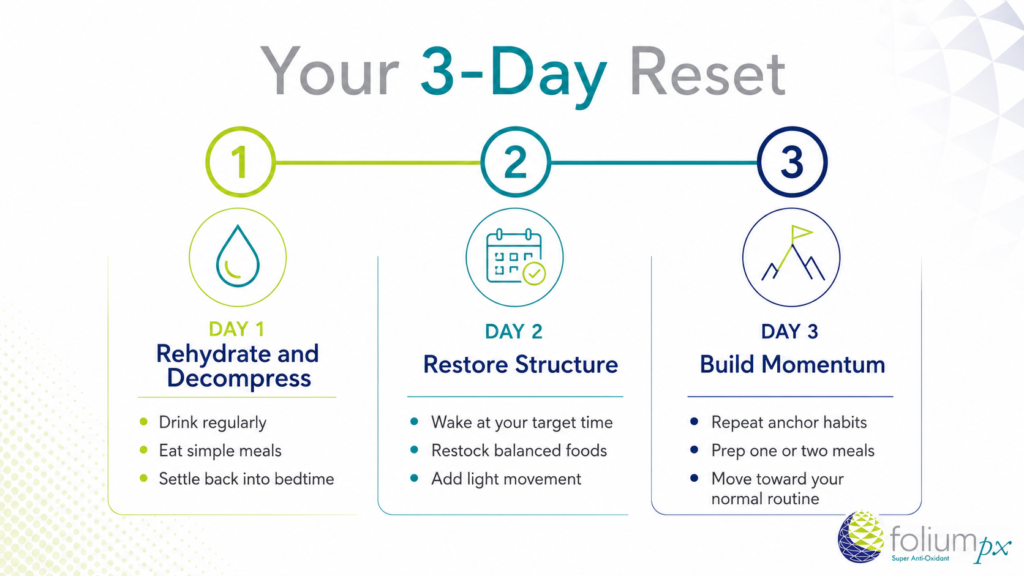
This schedule offers structure without turning recovery into another demanding project.
| Day | Main priority | Suggested actions |
| Day 1 | Rehydrate and decompress | Drink regularly, eat simple meals, unpack essentials, walk gently, and return to a reasonable local bedtime |
| Day 2 | Restore structure | Wake at your target time, get daylight, restock food, resume regular meals, and complete light or moderate movement |
| Day 3 | Build momentum | Repeat your morning routine, prepare food ahead, organize priorities, and move toward your normal exercise schedule |
Day 1: Rehydrate and decompress
Focus on the essentials. Drink fluids steadily, eat balanced meals, and avoid scheduling a punishing workout. Complete only the unpacking and household tasks needed for the next day.
Day 2: Restore structure
Wake at your intended time and spend part of the day outside. Restock fruit, vegetables, protein foods, whole grains, and simple ingredients. Resume light or moderate exercise if your energy has improved.
Day 3: Build momentum
Repeat the habits established on Day 2. Prepare one or two meals, organize the week’s priorities, and move closer to your normal workout routine if you feel comfortable.
Three days is a framework, not a deadline. Recovery may take longer after international travel, illness, severe sleep disruption, or a physically demanding trip.
Common Post-Vacation Recovery Mistakes
Skipping meals to compensate
Regular meals are generally more supportive than alternating between restriction and intense hunger. Build meals around protein, plants, fiber-rich carbohydrates, and dietary fats.
Exercising excessively
An extreme workout does not cancel a restaurant meal. Resume training according to your present energy, mobility, sleep, and hydration.
Forcing excessive amounts of water
Hydration is important, but more is not always better. Drinking excessive amounts can disrupt fluid and electrolyte balance. Drink steadily and follow individualized medical advice when applicable.
Starting an extreme cleanse
Avoid plans based on prolonged fasting without medical supervision, juice-only diets, laxative products, severe calorie restriction, or the unnecessary removal of major food groups.
A reset should help you return to sustainable habits, not create a second disruption.
Expecting an instant transformation
Your sleep, appetite, digestion, and energy may need several days to stabilize. Look for gradual improvement rather than demanding that your body feel completely normal by the next morning.
Changing supplement dosages without checking directions
Review labels before restarting products. Follow the published instructions and ask a qualified healthcare professional about interactions or individual concerns.
Treating enjoyment as failure
Travel and celebrations are part of a full life. A sustainable wellness routine should have room for flexibility without guilt.
How Folium Products Can Fit Into Your Routine
Folium products are designed to complement a broader wellness routine. They do not replace food, water, physical activity, sleep, or medical care.
Folium pX
Folium positions Folium pX as a plant-based nutraceutical and dietary supplement for toxic heavy-metal detox, full-body detox, antioxidant, free-radical, and immune support.
You can learn about the background and positioning of Folium pX before deciding whether it fits your established routine.
Folium pX is not intended to diagnose or treat heavy-metal poisoning or another medical condition. Suspected toxic exposure requires evaluation from an appropriate healthcare professional.
Folium Relax
Folium Relax is positioned for calm, relaxation, stress, mood, focus, mind, and sleep support. It should not be described as a treatment for insomnia, anxiety, depression, or jet lag.
Folium Immuno
Folium positions Folium Immuno for immune and inflammation support. It is not intended to prevent or treat infections, lung disease, or another medical condition.
Before using any product, review the label, ingredients, warnings, and timing instructions. You can also explore answers to common Folium pX questions and browse the Folium product range.
Vacation Recovery FAQs
How long does it take to feel normal after a vacation?
There is no universal timeline. Recovery depends on your trip length, time zones, sleep disruption, diet, alcohol intake, physical activity, illness, and individual health. Focus on consistent habits and gradual improvement rather than a fixed deadline.
Should I fast after eating more than usual?
Most people do not need to compensate with extreme fasting. Return to regular, balanced meals unless a healthcare professional has recommended a specific eating plan for you.
What can I do about temporary bloating or constipation?
Try regular meals, gradual fiber intake, sufficient liquids, and comfortable movement. Seek medical advice for severe pain, blood in the stool, vomiting, fever, persistent symptoms, or other concerns.
Should I exercise on the day I return?
Gentle movement may be appropriate if you feel well. Choose intensity based on your sleep, hydration, soreness, health, and travel duration.
Can supplements replace a recovery routine?
No. Supplements may complement an established wellness plan, but they do not replace hydration, nutritious meals, sleep, movement, or healthcare.
Return to Your Routine One Habit at a Time
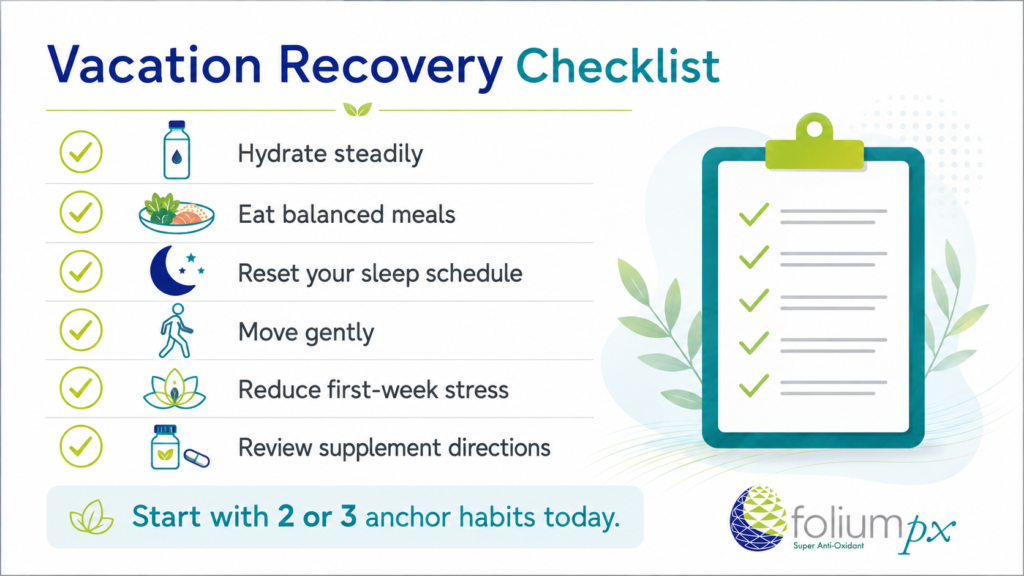
The most effective vacation recovery plan is not the most extreme one. It is the one you can repeat tomorrow.
Begin with two or three anchor habits. Drink water regularly. Prepare a balanced meal. Take a comfortable walk. Return to a consistent wake time. Then build from there.
Vacation does not erase your wellness progress, and recovery does not require punishment. A few days of supportive choices can help restore the rhythm that makes you feel grounded.
When supplements are part of your routine, use them thoughtfully, follow current instructions, and keep them within a broader foundation of food, hydration, movement, rest, and professional care when needed.
Further Reading
- Healthy Sleep Habits: Practical guidance from the National Heart, Lung, and Blood Institute on consistent sleep times, calming bedtime routines, bedroom conditions, caffeine, alcohol, and daytime activity.
- Eating, Diet, and Nutrition for Constipation: Guidance from the National Institute of Diabetes and Digestive and Kidney Diseases on gradually increasing fiber and drinking enough liquids to support digestive regularity.
- Understanding Your Risk for Blood Clots With Travel: CDC information on travel-related blood-clot risks, prevention steps, warning signs, and when to seek medical care after prolonged periods of sitting.
- Fluid and Electrolyte Balance: A MedlinePlus overview explaining what electrolytes are and how they support fluid balance and normal nerve and muscle function.