
Holiday Wellness Tips: 10 Simple Habits for the Season

Practical holiday wellness tips focus on protecting five basics through a busy season: sleep, hydration, balanced meals, movement, and downtime. Small, repeatable habits work better than strict rules, because schedules shift, travel interrupts routines, and gatherings run late. Use the ideas below to stay consistent without giving up the parts of the season you enjoy.
What Are the Best Holiday Wellness Tips?
The best holiday wellness tips are the ones you can repeat on a busy day: keep a steady wake time, carry water, add vegetables or fiber to holiday plates, walk for 10 minutes, and schedule quiet time between events. Supplements are optional and should always follow the product label.
| Holiday Wellness Tip | What to Do | Best For |
|---|---|---|
| 1. Keep a steady wake time | Rise within an hour of your usual time, even after a late night. | Sleep |
| 2. Make unfamiliar rooms sleep-friendly | Pack an eye mask and earplugs, and keep the room dark and cool. | Travel |
| 3. Set a gift and event budget | Decide on a spending limit before shopping begins. | Stress |
| 4. Use two-minute resets | Step outside for slow breathing between commitments. | Stress |
| 5. Fill half the plate with produce | Start with vegetables, then add favorite holiday dishes. | Meals |
| 6. Follow the two-hour food rule | Refrigerate leftovers within two hours of serving. | Food safety |
| 7. Walk after meals | Take a 10-minute walk after a big dinner. | Movement |
| 8. Keep water within reach | Carry a refillable bottle to parties, stores, and airports. | Hydration |
| 9. Alternate drinks with water | Pair each alcoholic drink with a glass of water, or choose nonalcoholic options. | Gatherings |
| 10. Follow supplement labels | Pack servings in labeled containers and never double up after a missed serving. | Routine |
Why Do Healthy Habits Slip During the Holidays?
Healthy habits slip because the holidays change everything at once: meal times, sleep schedules, activity levels, and social demands. No single event causes the drift. It builds from later nights, skipped walks, and richer meals, which is why flexible habits beat all-or-nothing resets.
The Cost of an Unpredictable Calendar
Routines run on cues such as a morning commute, a regular lunch hour, or an evening wind-down. Travel and parties remove those cues. Rebuild a few anchors (a wake time, a water bottle, a short walk) and the rest of your routine becomes easier to resume.
Holiday Wellness Tips for Better Sleep
Protect your wake time first. A steady wake time anchors your body clock even when bedtime slips, and it is the easiest sleep habit to keep through travel and late gatherings.
The CDC’s National Center for Health Statistics reports that 30.5% of U.S. adults slept less than 7 hours on average in 2024, and 18.1% had trouble staying asleep. Adults ages 50 to 64 had the highest short-sleep rate at 34.5%. Holiday schedules add late dinners, time changes, and unfamiliar beds to that baseline.
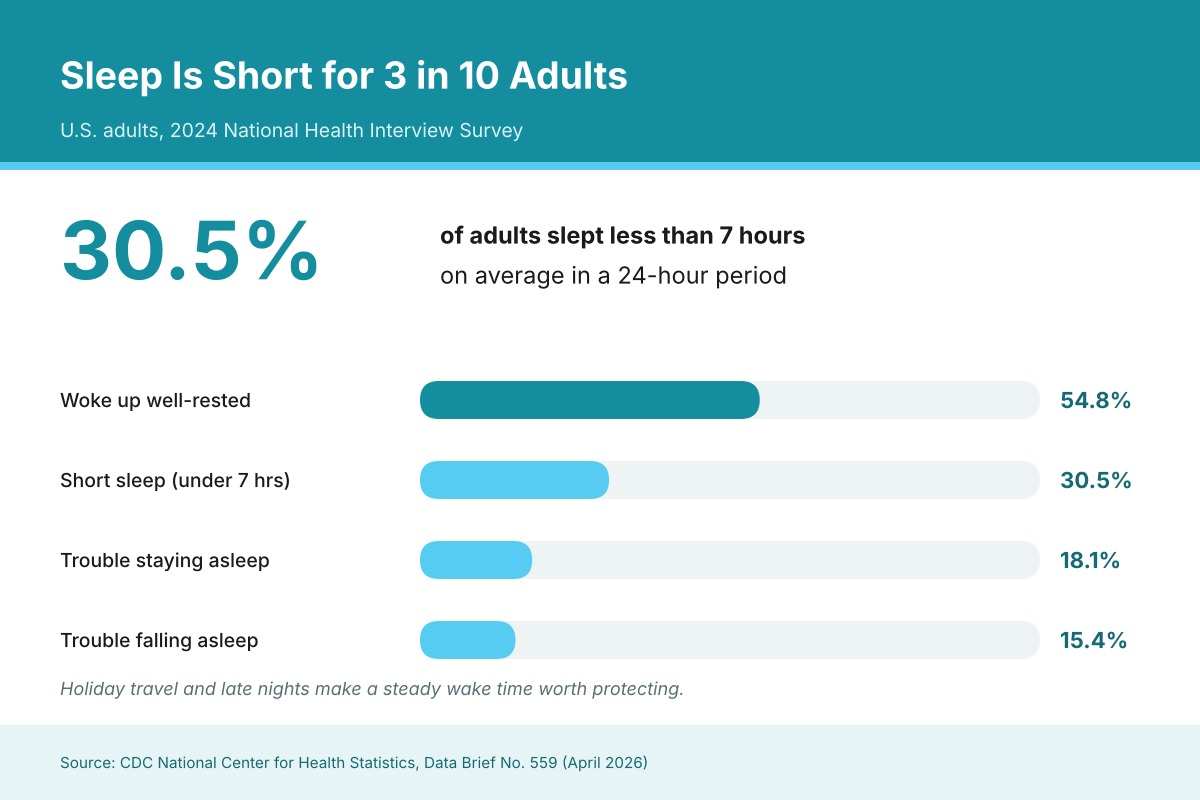
Source: CDC National Center for Health Statistics, Data Brief No. 559.
Keep a Steady Wake Time
- Pick an anchor: Choose a wake time within an hour of your normal schedule.
- Get daylight early: A short morning walk outdoors helps signal the start of the day.
- Limit late caffeine: Switch to decaf or herbal tea after mid-afternoon if caffeine affects your sleep.
- Watch late drinks: Alcohol close to bedtime can fragment sleep, so finish drinking earlier in the evening when possible.
Make Unfamiliar Rooms Sleep-Friendly
Dark, quiet, and cool is the goal in any bedroom. An eye mask, earplugs, and a phone charged across the room make guest rooms and hotels easier to sleep in. A familiar wind-down, such as a warm shower or a few minutes of reading, tells your body that bedtime has arrived.
Some adults also add a relaxation-focused supplement to an evening routine. Folium Relax, an evening formula is made to support relaxation and restful sleep, and its label lists serving directions. If you take medications or have a health condition, check with a healthcare professional before adding any supplement.
How to Manage Holiday Stress Without Skipping the Season
Manage holiday stress by naming what drives it, then matching each source to one small action. The American Psychological Association found that 89% of U.S. adults say something causes them stress during the holiday season, and 41% say their stress rises compared with other times of year.
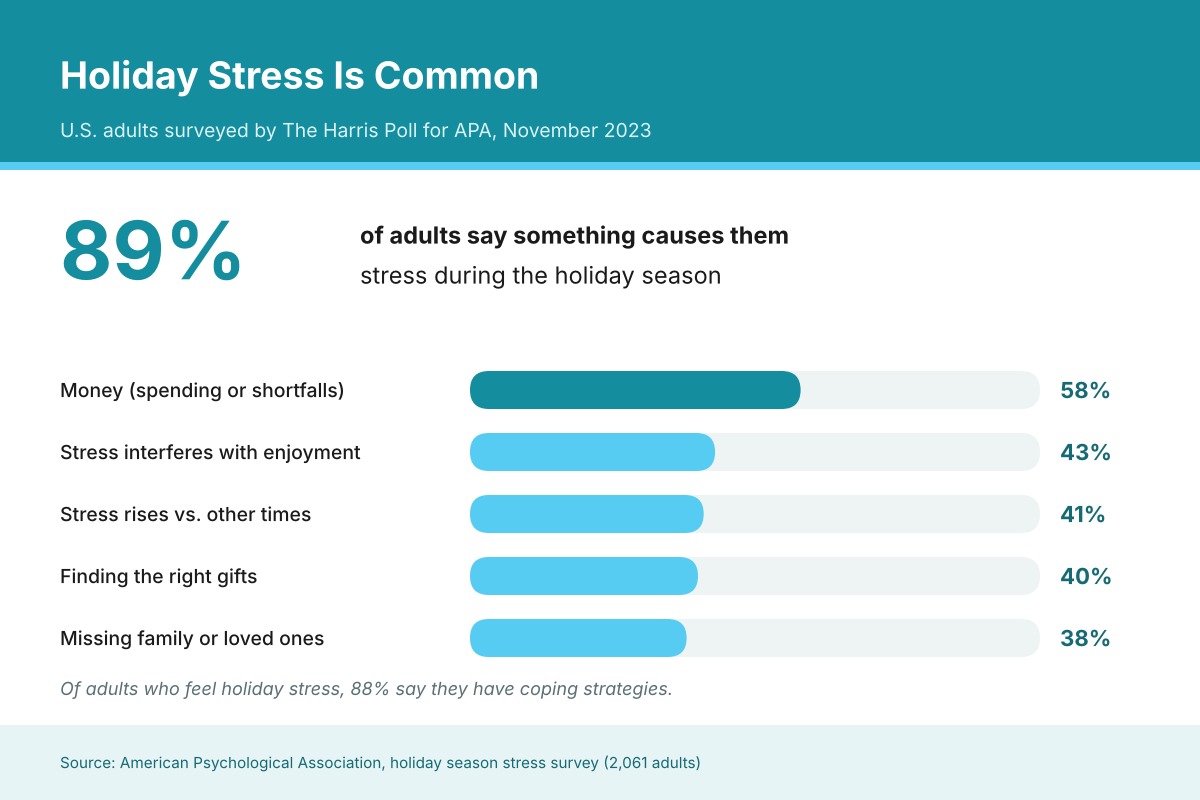
Source: American Psychological Association, 2023 holiday season stress survey (The Harris Poll, 2,061 adults).
| Common Stress Source | Share of U.S. Adults (APA, 2023) | One Practical Response |
|---|---|---|
| Spending too much or having too little to spend | 58% | Set a firm budget for gifts, food, and travel before shopping. |
| Stress that interferes with enjoying the holidays | 43% | Cut one nonessential event and protect one quiet evening. |
| Finding the right gifts | 40% | Make a short list early and shop in one or two sessions. |
| Missing family or loved ones | 38% | Schedule a video call or a handwritten note. |
Use Two-Minute Resets
A reset does not need a full mindfulness session. Try slow breathing with a longer exhale than inhale, a short walk around the block, or a few minutes in a quiet room before the next commitment. Repeat these resets several times a day and they add up.
Set Boundaries and Talk It Through
Choose a manageable number of gatherings and tell hosts your availability early. The APA survey found that 70% of stressed adults are comfortable talking about their stress, yet only 41% actually do. Telling a friend or family member how the season feels is a low-effort habit with real value.
- Prioritize rest: Leave time to recharge between holiday commitments.
- Set boundaries: Decline extra invitations politely and without long explanations.
- Make time for mindfulness: Use a few quiet minutes of breathing when your schedule allows.
Healthy Holiday Eating and Digestion Tips
Enjoy holiday food and keep a simple structure: regular meals, produce on the plate, and a return to familiar eating patterns the next day. One rich dinner is not a setback.
Build a Balanced Holiday Plate
Start with vegetables and fiber-rich foods such as legumes, whole grains, and fruit, then add protein and your favorite seasonal dishes. The federal 2025 to 2030 Dietary Guidelines for Americans emphasize whole foods, fewer highly processed foods, and less added sugar, a useful lens for choosing among holiday options. Eating at a relaxed pace helps you notice fullness.
Holiday Food Safety Basics
Refrigerate perishable food within two hours of serving, or within one hour if it sits above 90°F, such as in a hot car. Federal food safety guidance also recommends eating refrigerated leftovers within four days, freezing what you will not finish, and reheating leftovers to 165°F.
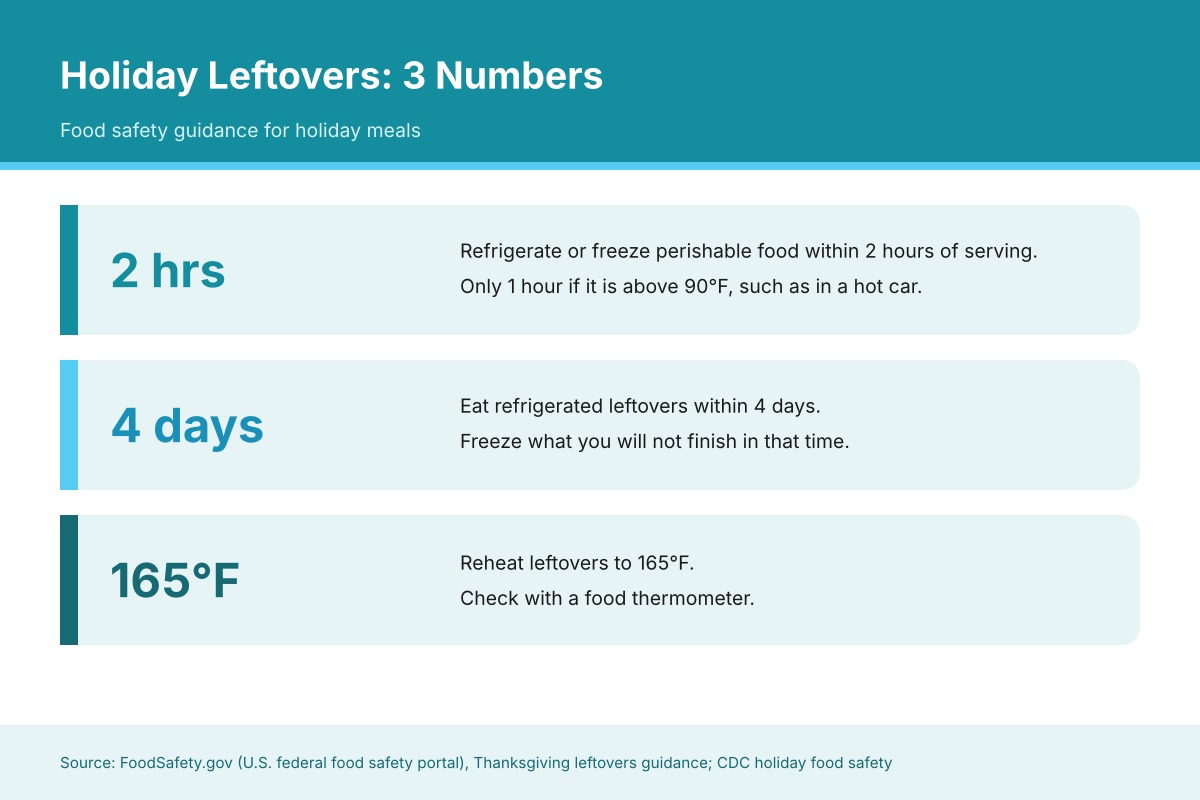
Source: FoodSafety.gov, Thanksgiving leftovers guidance, and CDC holiday food safety.
Pack Smart Snacks for Long Days
- Fruit: Apples, clementines, and grapes travel well and need no refrigeration.
- Nuts and seeds: A small handful adds protein and keeps hunger steady during shopping trips.
- Whole-grain crackers: Pair them with nut butter or cheese for a portable mini meal.
Simple Ways to Stay Active During the Holidays
Adults need at least 150 minutes of moderate-intensity activity a week plus two days of muscle-strengthening, according to the CDC and the Physical Activity Guidelines for Americans. That total can be built from short bouts, which suits a crowded calendar.
Holiday Wellness Tips for Short Workouts and Walks
Ten-minute walks after meals, a stretching routine before bed, and bodyweight exercises in a hotel room all count toward your weekly total. Link movement to something you already do: walk while you catch up on a call, take the stairs at the airport, or suggest a family walk before dessert. Read the CDC adult activity guidelines for intensity examples.
How to Stay Hydrated at Holiday Parties and Events
Keep a glass or refillable bottle within reach and sip steadily rather than waiting for thirst. Busy gatherings, travel days, and heated indoor air make it easy to forget fluids.
How Much Fluid Do Adults Need?
The National Academies of Sciences, Engineering, and Medicine set an Adequate Intake of about 3.7 liters of total water per day for adult men and 2.7 liters for adult women. That total includes all beverages and the roughly 20% that comes from food. Needs rise with heat, activity, and individual health factors, so follow thirst and any guidance from your healthcare professional.
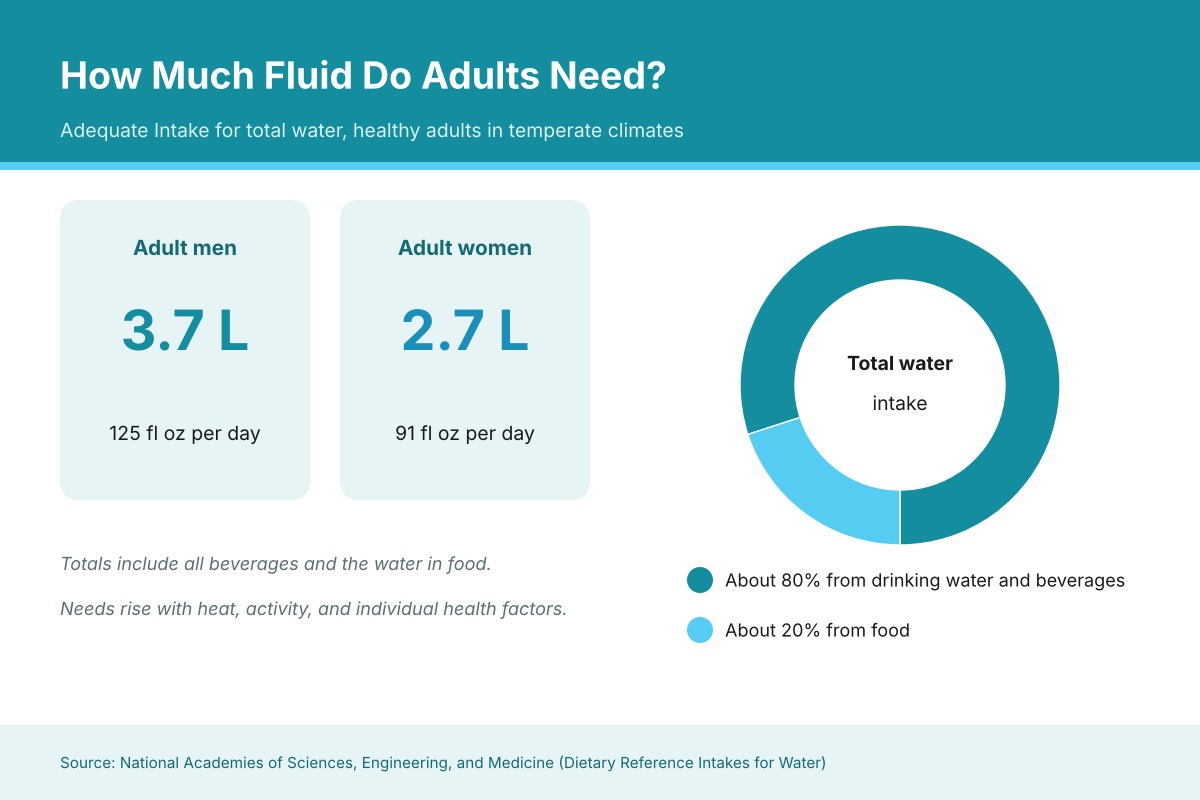
Source: National Academies of Sciences, Engineering, and Medicine, Dietary Reference Intakes for Water.
Alcohol and Hydration at Gatherings
The 2025 to 2030 Dietary Guidelines for Americans advise consuming less alcohol for better health. If you choose to drink, alternating with water or a nonalcoholic option slows the pace and supports hydration. Water does not prevent impairment, and it cannot guarantee relief from next-day symptoms, so plan safe transportation ahead of time.
- Drink water regularly: Keep a glass nearby at every gathering.
- Add flavor: Citrus, cucumber, or herbal tea make plain water more appealing.
- Eat water-rich foods: Fruit and vegetable trays contribute to total fluid intake.
How to Keep Your Wellness Routine While Traveling
Keep your routine portable. Pack the few items that anchor your day (water bottle, snacks, sleep aids, labeled supplements) and the rest of your habits follow more easily.
| Travel Essential | Why It Helps | Packing Tip |
|---|---|---|
| Refillable water bottle | Makes regular sipping automatic on long travel days. | Carry it empty through security, then refill past the checkpoint. |
| Eye mask and earplugs | Make unfamiliar rooms easier to sleep in. | Keep them in a carry-on pocket for easy access. |
| Fruit, nuts, whole-grain crackers | Prevent long gaps between meals. | Pack single-serve portions in reusable bags. |
| Labeled supplements and medications | Keep servings accurate and easy to identify. | Use original containers or a clearly labeled organizer. |
| Comfortable walking shoes | Make short walks easy to fit into a trip. | Place them at the top of your bag. |
Packing Supplements for Holiday Travel
Check each label before departure and follow its serving and storage instructions. Keep supplements and medications in original or clearly labeled containers, and carry them in your carry-on rather than checked luggage. A phone reminder or a weekly organizer can help, but the best system is the one that fits your routine.
If Folium pX is part of your daily routine, the labeled serving directions are worth reviewing before you leave so you know how to handle time zone changes and irregular meal times.
Choosing Healthy Travel Snacks and Water Habits
Look for refill stations in terminals and hotels. Keep fruit or nuts in your bag so a delayed flight does not turn into a skipped meal. Familiar snacks make it easier to eat regularly during long days.
Where Do Antioxidant Supplements Fit in a Holiday Wellness Routine?
Antioxidant supplements are an optional addition to a routine built on sleep, nutritious meals, hydration, and movement. They do not replace those foundations, and they are not intended to diagnose, treat, cure, or prevent any disease.
What to Check Before Choosing a Supplement
Compare labels the same way you would compare any product. Review the ingredient and sourcing details for any supplement you are considering and ask a healthcare professional about suitability, especially if you take medications.
| Label Detail | What to Look For |
|---|---|
| Ingredient list | Clearly named ingredients and amounts, plus any allergen statements. |
| Serving directions | A defined serving size and how often to take it. |
| Storage instructions | Temperature and humidity guidance that suits travel conditions. |
| Cautions and interactions | Warnings to review with a healthcare professional before use. |
| Regulatory statement | The standard FDA disclaimer for dietary supplements. |
A Plant-Based Antioxidant Option for Everyday Routines
Folium pX is a plant-based antioxidant supplement made with pine bark and grape seed extracts. The plant-based antioxidant formula can be added to an existing wellness routine according to its labeled directions, including on days when your schedule changes.
The brand was founded by Babry Oren, an honorary doctorate recipient. You can meet the founder behind the formula and read how the company approaches product quality.
What If You Miss a Serving?
Missing a serving during travel does not erase your other healthy habits. Resume your normal routine at the next scheduled serving, follow the product label, and do not double up to compensate unless a healthcare professional advises it. Questions about products or orders can go straight to the Folium pX support team.
Holiday Wellness Tips FAQs
What are the best holiday wellness tips?
Keep a steady wake time, carry water, add vegetables or fiber to holiday meals, take short walks, and schedule quiet time between events. These habits are flexible and work even when travel and parties change your routine.
How can I stay healthy during the holidays without strict rules?
Choose two or three anchor habits, such as a consistent wake time, a water bottle you carry everywhere, and a 10-minute walk after dinner. Return to them after a busy day instead of starting over.
How do I sleep better when traveling for the holidays?
Keep your wake time close to normal, make the room dark and cool, use earplugs or an eye mask, and limit caffeine late in the day. Finish alcohol earlier in the evening because it can fragment sleep.
How can I manage holiday stress?
Set a budget before spending begins, limit the number of events, take short breathing breaks, and talk with someone you trust. The American Psychological Association found that 89% of U.S. adults report at least one source of holiday stress, so you are not alone.
How much water should I drink at holiday gatherings?
The National Academies set an Adequate Intake of about 3.7 liters of total water per day for men and 2.7 liters for women, including water from all beverages and food. Needs vary with activity, climate, and health, so sip regularly and follow your healthcare professional’s guidance.
Can I take supplements while traveling?
Yes, if you follow the label. Keep supplements in original or clearly labeled containers, pack them in your carry-on, and bring only the servings you need plus a small buffer. Ask a healthcare professional about interactions if you take medications.
What should I do if I miss a supplement serving?
Resume at your next scheduled serving and follow the directions on the product label. Do not double up to make up for a missed serving unless a healthcare professional advises it.
How long are holiday leftovers safe to eat?
Refrigerate perishable leftovers within two hours (one hour above 90°F), eat them within four days, freeze what you will not finish, and reheat to 165°F.
Support Your Routine This Season
Build the foundations first: sleep, water, balanced meals, movement, and rest. If an antioxidant supplement fits your plans, review the label, choose a formula that suits your preferences, and keep it consistent with your daily routine.
| Shop Folium pX Supplements | Contact Folium pX |
These statements have not been evaluated by the Food and Drug Administration. This product is not intended to diagnose, treat, cure, or prevent any disease. Individual results vary.


