
Antioxidant Foods to Pair With Antioxidant Supplements
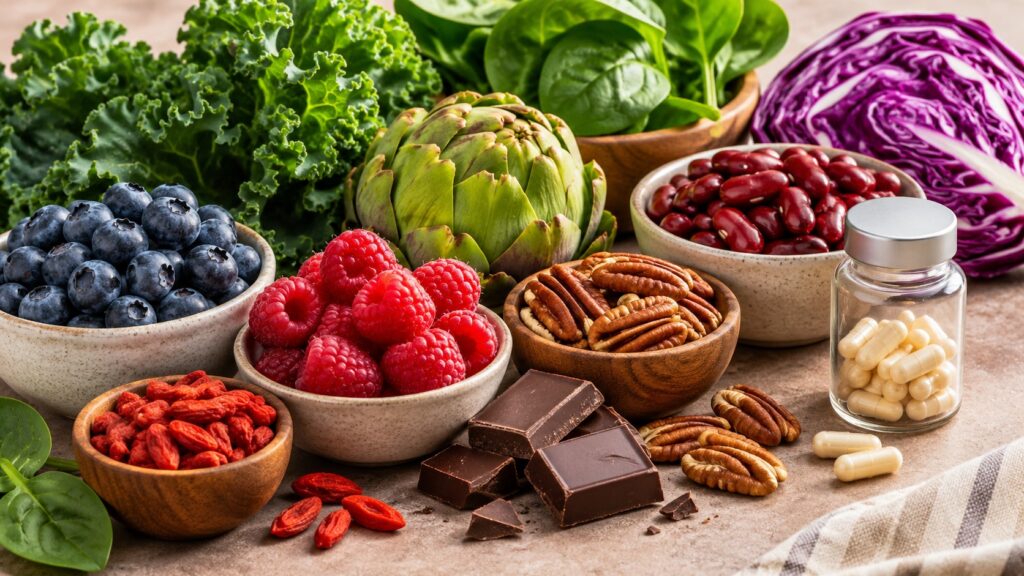
Choosing foods to eat alongside antioxidant supplements is simpler than most labels make it sound: build meals around colorful fruit, leafy greens, beans, nuts, and cocoa, then treat a supplement as an add-on to that base, not a substitute for it. Ten antioxidant-rich foods, backed by NIH, CDC, and USDA-based numbers, make a practical starting point, and a few label-reading habits help you buy a supplement that fits your diet and your budget.
What Foods Should You Pair With Antioxidant Supplements?
Pair antioxidant supplements with a varied mix of colorful fruits, leafy greens, beans, and nuts, because whole foods deliver fiber, vitamins, and plant compounds that a capsule alone does not.
A practical weekly pattern looks like this:
- Berries: blueberries and raspberries for fiber and plant pigments.
- Leafy greens: kale and spinach for vitamin K and folate.
- Beans and artichokes: the highest-fiber items on this list.
- Nuts and cocoa: pecans and dark chocolate in measured portions.
- Your supplement: taken as the label directs, usually with a meal.
Antioxidant Foods vs. Antioxidant Supplements: What Each One Does
Antioxidants are substances that limit oxidation, a chemical process involving unstable molecules called free radicals. Your body makes some of them, foods supply others, and supplements add concentrated amounts of specific ones.
Why Whole Foods Come First
The federal Dietary Guidelines for Americans advise getting most nutrients from food and beverages, and NIH Office of Dietary Supplements fact sheets repeat that point because foods bring vitamins, minerals, and fiber together. The NIH National Center for Complementary and Integrative Health adds that the high doses in supplements may act differently than the smaller amounts found in food.
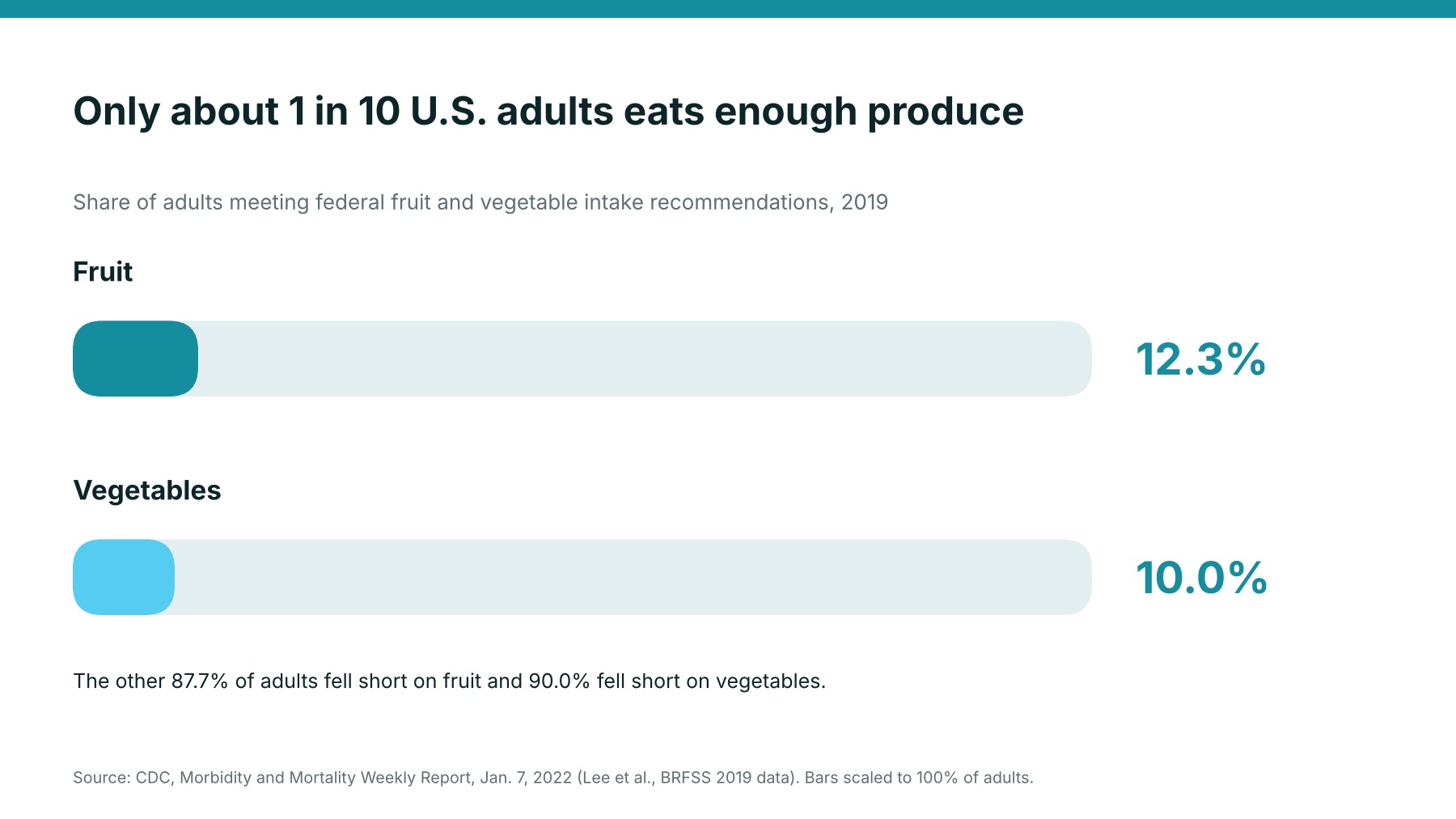
Most adults have room to improve here. CDC survey data from 2019 show that only 12.3% of U.S. adults met fruit recommendations and 10.0% met vegetable recommendations.
Where Antioxidant Supplements Fit
Supplements make sense as a convenient, consistent dose of a specific ingredient, such as a plant extract, on top of a food-first routine. They do not make up for a diet that is low in produce, and a higher dose is not automatically a better one. Label claims, ingredient quality, and your own medications matter more than the word “antioxidant” on the front of the bottle.
Top 10 Antioxidant-Rich Foods to Add to Your Plate
These 10 foods combine plant pigments and polyphenols with measurable nutrients like fiber, folate, and vitamin K. Standard servings and published NIH or USDA-based figures are listed for each.
| # | Food | Standard serving | What it provides |
|---|---|---|---|
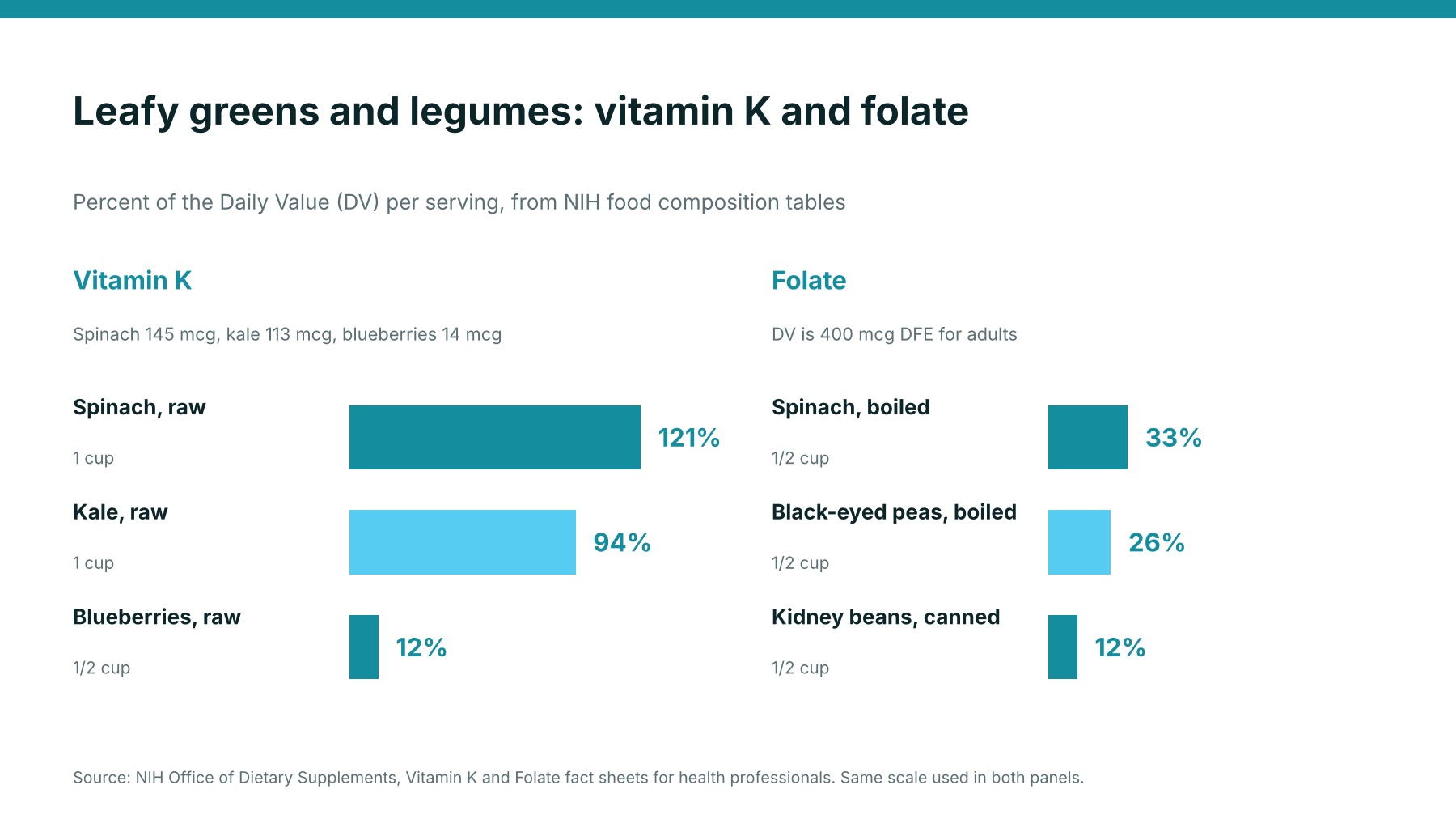
| 1 | Blueberries (wild or cultivated) | 1/2 cup, raw | 14 mcg vitamin K (12% DV), plus anthocyanin pigments |
| 2 | Dark chocolate (70% cocoa or higher) | 1 ounce | Cocoa polyphenols; no standard nutrient benchmark, so watch portion size and added sugar |
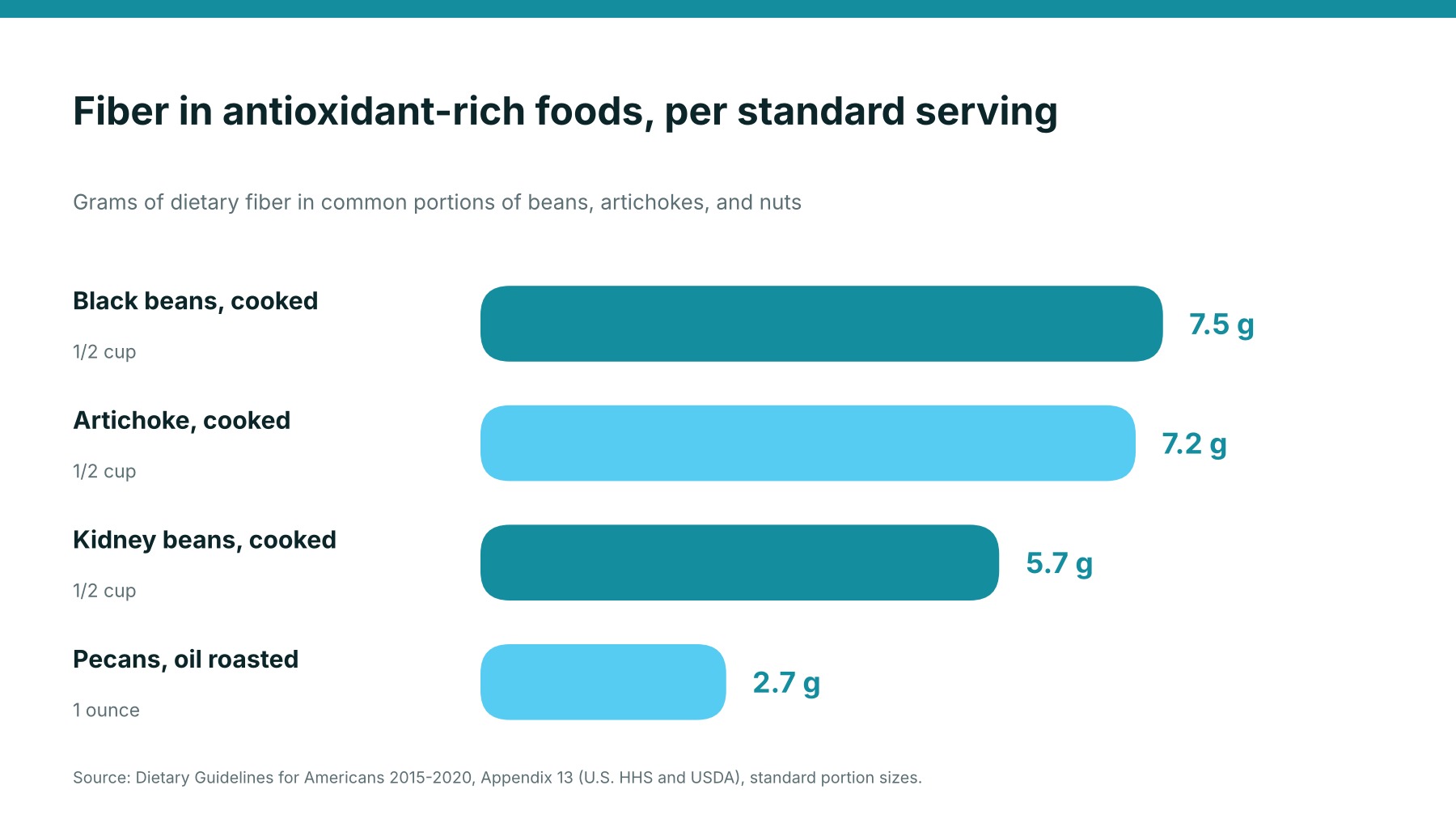
| 3 | Pecans | 1 ounce | 2.7 g fiber, plus unsaturated fats |
| 4 | Artichokes | 1/2 cup, cooked | 7.2 g fiber |
| 5 | Goji berries (dried) | Small handful | Carotenoids and other plant compounds; ask a pharmacist about interactions if you take prescription medication |
| 6 | Raspberries | 1 cup | 8.0 g fiber |
| 7 | Kale | 1 cup, raw | 113 mcg vitamin K (94% DV) |
| 8 | Red cabbage | 1 cup, shredded | Anthocyanin pigments; an inexpensive base for slaws and salads |
| 9 | Kidney beans and other beans | 1/2 cup | 5.7 g fiber (cooked); 46 mcg folate, 12% DV (canned) |
| 10 | Spinach | 1/2 cup boiled, or 1 cup raw | 131 mcg folate, 33% DV (boiled); 145 mcg vitamin K, 121% DV (raw) |
Figures come from the NIH Office of Dietary Supplements vitamin K fact sheet and the Dietary Guidelines fiber table, with raspberry fiber from Harvard Health. DV means Daily Value.
Berries, Goji, and Dark Chocolate
Keep frozen blueberries and raspberries on hand for oatmeal, yogurt, and smoothies; frozen fruit costs less than fresh out of season and keeps well. One cup of raspberries supplies 8.0 grams of fiber, which makes it one of the most fiber-dense fruits. For chocolate, choose 70% cocoa or higher and stick to about an ounce, since calories and sugar add up quickly.
Leafy Greens and Red Cabbage
Kale and spinach are two of the richest everyday sources of vitamin K, and boiled spinach is also a strong folate source. If you take warfarin, keep your vitamin K intake from food and supplements steady from day to day, as NIH advises. Red cabbage is a budget-friendly way to add color and crunch to a week of lunches.
Beans, Artichokes, and Pecans
Beans and artichokes lead the list for fiber, while pecans add a small, satisfying amount alongside unsaturated fats. Canned beans are fast and affordable; rinsing them cuts the sodium.
How to Pair Antioxidant Foods With Your Supplement Routine
Start with the supplement label, keep total vitamin intake within published limits, and use food to fill the gaps the label leaves open.
Read the Supplement Label First
The label sets the serving size, the timing, and whether to take it with food. Botanical extracts vary by product, so no single timing rule applies to all of them. A pharmacist can confirm product-specific directions in a minute.
Match Fat-Soluble Nutrients With a Little Fat
Vitamin K is fat-soluble, and so are vitamin E and carotenoids. A drizzle of olive oil on a kale salad or a handful of pecans with berries is a simple way to eat these foods with some fat.
Keep Vitamin C Within Limits
The NIH Office of Dietary Supplements lists a 90 mg Daily Value for vitamin C and a 2,000 mg daily upper limit for adults, counting food, drinks, and supplements together. The same NIH fact sheet notes that five varied servings of fruits and vegetables can supply more than 200 mg on their own. Cooking reduces vitamin C, so eat some produce raw or steam it lightly.
Know the Cautions Before You Combine Products
High-dose beta-carotene supplements have been linked to increased health risks in current smokers, and NIH has cautioned that high doses of antioxidant supplements may be harmful in some cases. Anyone in active medical treatment should ask their care team before adding antioxidant supplements, because NIH notes that some may interact with treatment. The NCCIH guide to antioxidant supplement safety covers the evidence in detail.
Sample Day: Antioxidant-Rich Meals Plus a Daily Supplement
This sample day uses only the foods above and leaves the supplement timing to the label.
| Meal | Foods | Pairing note |
|---|---|---|
| Breakfast | Oatmeal topped with 1 cup raspberries or blueberries | A common time to take a supplement that the label says to take with food |
| Lunch | Spinach and kale salad with kidney beans, red cabbage, and olive oil | Olive oil adds fat for fat-soluble vitamin K |
| Snack | 1 ounce of pecans and a square of dark chocolate | Measure portions; both are calorie-dense |
| Dinner | Roasted artichokes, whole grains, and lightly steamed greens | Steaming limits vitamin C losses |
Affordable Ways to Eat More Antioxidant-Rich Foods
Eating this way does not require specialty products. These swaps keep the cost down:
- Buy frozen berries for oatmeal and smoothies.
- Choose canned beans, rinsed, over pre-made sides.
- Use red cabbage as a long-lasting salad base.
- Buy pecans and dark chocolate in small amounts and portion them out.
- Swap one processed snack a day for a piece of fruit or a handful of nuts.
Why ORAC Scores Are a Poor Shopping Guide
ORAC (Oxygen Radical Absorbance Capacity) is a laboratory measure of antioxidant activity. In 2012, the USDA withdrew its ORAC database for foods, stating that the values have no proven relevance to effects in people and were routinely misused to market foods and supplements. Use fiber, vitamin, and ingredient information instead, and pick foods you will actually eat.
How to Choose a Supplement to Complement Your Meals
A good supplement choice comes down to a short checklist you can run in the store or online.
How to Choose Antioxidant Supplements That Fit Your Diet
- Full ingredient list: every extract and its amount per serving.
- Clear serving directions: when to take it and with what.
- Sourcing information: where the plant material comes from and how it is processed.
- Measured claims: wording like “supports” is appropriate; promises to treat or cure a condition are not.
- Medication check: a pharmacist review if you take prescriptions.
Where Folium pX Fits in an Antioxidant-Rich Routine
Folium pX is a plant-based dietary supplement formulated with pine bark and grape seed extracts, designed to complement a food-first diet. You can review the Folium pX plant-based formula, read about pine bark and grape seed extract sourcing, and follow the directions for taking Folium pX alongside the meals above. Individual results vary.
Have a question about your own routine? Browse the common supplement questions or contact the team for help.
Antioxidant Foods and Supplements FAQ
What is the best way to take antioxidant supplements with food?
Follow the directions on the label, which usually say to take the supplement with a meal. Add a little dietary fat if the product contains fat-soluble nutrients, and ask a pharmacist about any product-specific instructions.
Do antioxidant supplements replace fruits and vegetables?
No. Fruits and vegetables supply fiber, vitamins, and minerals together, and federal guidelines advise getting most nutrients from food. Supplements are best treated as an add-on to a varied diet.
What are the 10 most powerful antioxidants?
There is no accepted ranking of the 10 most powerful antioxidants for human health. Different foods supply different nutrients and polyphenols, so variety works better than chasing one laboratory score.
What drink is high in antioxidants?
Unsweetened green tea contains catechins, including EGCG, and pomegranate juice contains plant polyphenols. Their presence does not guarantee a specific health outcome, so treat them as part of a varied diet.
What is the most powerful antioxidant in the body?
Glutathione is an important antioxidant compound the body makes, but calling it the most powerful oversimplifies things. Antioxidant systems work together through several pathways, and there is no universal ranking.
What are the big 3 antioxidants?
Vitamin C, vitamin E, and beta-carotene are three familiar dietary antioxidants, but no formal “big three” exists. They have different roles, and more is not always better, especially with high-dose supplements.
What is the top antioxidant food?
No single food is the top antioxidant food. Laboratory values vary by test method and serving size, and USDA withdrew its ORAC database in 2012 for that reason. A mix of berries, greens, beans, and nuts is more useful.
Should smokers take beta-carotene supplements?
Smokers should talk with a healthcare provider first. NIH sources report that high-dose beta-carotene supplements have been linked to increased health risks in current smokers.
These statements have not been evaluated by the Food and Drug Administration. This product is not intended to diagnose, treat, cure, or prevent any disease. Speak with a qualified healthcare professional about your individual needs.


