
Pool Days, Sunscreen, and Pesticides: Hidden Summer Chemical Exposures You May Not Think About

Summer should feel light, active, and full of energy. Pool days, backyard meals, gardening, outdoor sports, sunscreen, bug spray, and long afternoons in the sun are all part of what makes the season enjoyable.
At Folium pX, we believe wellness should support real life. That means enjoying the moments you love while becoming more aware of the everyday exposures that can quietly add to your body’s daily burden.
Many summer habits are healthy, necessary, or enjoyable. Sunscreen helps protect your skin from the sun. Pool chemicals help keep swimming water safer. Lawn and garden products help manage pests. Insect repellents can make outdoor time more comfortable. The goal is not to fear these things or avoid summer living. The goal is to understand where hidden summer chemical exposures may show up, reduce what you can, and support your body’s natural detox pathways with consistent daily habits.
Your body is always working to process and eliminate unwanted compounds through the liver, kidneys, digestive system, lungs, skin, and lymphatic system. These systems rely on hydration, minerals, fiber, protein, antioxidants, movement, sleep, and steady wellness support.
Summer can be enjoyed with awareness. A few smarter choices can help you feel more balanced, energized, and supported all season long.
Key Takeaways
- Hidden summer chemical exposures can come from everyday routines like swimming, sunscreen use, gardening, bug spray, outdoor cleaning, and heated plastics.
- Pool chemicals help keep water safer, but chlorine can react with sweat, dirt, urine, and personal care products to form chloramines.
- Sunscreen remains important for skin protection, and a smarter routine can include broad-spectrum sunscreen, shade, hats, sunglasses, and thoughtful product choices.
- Lawn products, garden sprays, insect repellents, and outdoor dust can add to summer exposure, especially when residues are tracked indoors by shoes, pets, or play.
- Folium pX can complement a summer wellness routine built around hydration, antioxidants, fiber, movement, sleep, mindful exposure reduction, and daily detox support.
Did you know? The strong “pool smell” many people notice is often linked to chloramines, not just chlorine. What is one simple habit you use to feel better after a long pool day?
What Are Hidden Summer Chemical Exposures?
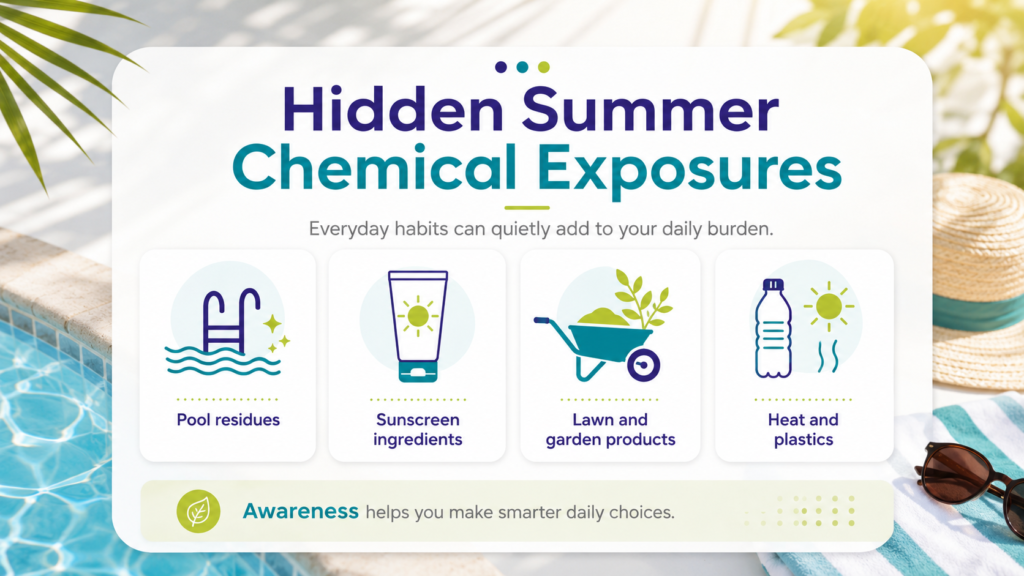
Hidden summer chemical exposures are everyday contacts with compounds that may come from seasonal activities, products, or environments. These exposures are often small on their own, but they can add up through repeated daily routines.
During summer, exposure may come from:
- Pool chemical residues and chloramines
- Sunscreen ingredients, fragrance, and preservatives
- Bug sprays and insect repellents
- Lawn and garden pesticides
- Herbicides used around outdoor spaces
- Outdoor cleaning products
- Plastic bottles and food packaging exposed to heat
- Pool toys, inflatables, and vinyl outdoor gear
- Smoke from grills or fire pits
- Outdoor dust, pollen, and residues tracked indoors
The word “hidden” does not mean rare. These exposures are often part of normal summer life. You may apply sunscreen several times a day, swim in treated pool water, walk across treated grass, sit near a fire pit, use bug spray, drink from plastic bottles, or clean patio furniture with scented sprays.
Exposure can happen through skin contact, inhalation, accidental swallowing, food contact, or household dust. Children, pets, pregnant people, older adults, and sensitive individuals may need extra care because they may come into closer contact with floors, grass, pool water, or household residues.
Awareness is the first step. Once you know where exposures may appear, you can make practical choices that fit your life. You do not need a perfect routine. You need a consistent one.
For more everyday ideas, read our guide to Spring Detox Checklist: 7 Simple Ways to Reduce Your Toxic Load This Season.
Pool Days: Chlorine, Chloramines, and What Happens Around the Water
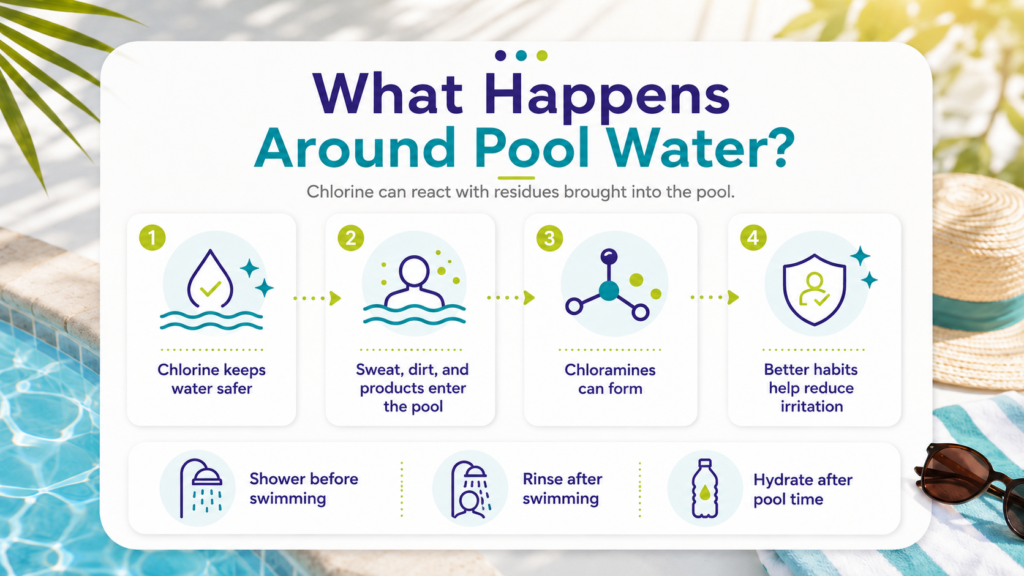
Pools are one of the best parts of summer. Swimming supports movement, family time, relaxation, and outdoor fun. Pool chemicals also play an important role by helping reduce germs in the water.
The issue is not chlorine alone. The concern is what can happen when chlorine reacts with sweat, dirt, urine, body oils, sunscreen, lotions, hair products, and other residues brought into the water. This reaction can create chloramines, which are linked with the strong “pool smell” many people associate with chlorine.
For some people, chloramines may irritate the eyes, nose, throat, skin, or lungs, especially in indoor pools or poorly ventilated pool areas. If a pool area smells very strong, your eyes burn quickly, or the air feels heavy, it may be a sign to take a break and get fresh air.
Simple pool habits can help reduce unnecessary exposure:
- Shower before swimming.
- Rinse off after swimming.
- Avoid swallowing pool water.
- Do not swim when sick.
- Keep urine, sweat, and dirt out of the pool.
- Choose well-maintained pools.
- Wash swimsuits and towels after pool days.
- Clean reusable water bottles often.
- Hydrate before and after swimming.
Showering before swimming is one of the simplest steps. It helps remove sweat, dirt, oils, and product residue before you enter the pool. Rinsing after swimming helps remove pool residues from your skin and hair.
Hydration also matters. Long pool days can make people forget to drink water because they are surrounded by water but not actually hydrating. Bring a refillable bottle, add electrolytes if needed, and include water-rich foods like watermelon, cucumber, oranges, and tomatoes.
Sunscreen: Necessary Protection With Smarter Product Choices
Sunscreen is important for summer health. It helps protect skin from UV exposure and should not be skipped simply because people are thinking about chemical exposure. A smarter approach is layered protection.
That means using sunscreen along with shade, hats, sunglasses, UPF clothing, and timing outdoor activities when the sun is less intense, when practical.
Some sunscreen ingredients may be absorbed through the skin, but absorption does not automatically mean an ingredient is unsafe. The key is to choose products thoughtfully, especially if you apply sunscreen daily or have sensitive skin.
Product choices that may help include:
- Broad-spectrum sunscreen
- Fragrance-free options for sensitive skin
- Mineral sunscreen options with zinc oxide or titanium dioxide
- Water-resistant formulas for swimming or sweating
- Products that match your skin type and lifestyle
- Sunscreen that is not expired
- Products stored away from extreme heat
Avoid leaving sunscreen in a hot car for long periods. Heat can affect product quality. Keep sunscreen in a bag, cooler, or shaded place when you are outdoors.
Also remember that sunscreen works only when used correctly. Apply enough, reapply as directed, and reapply after swimming or sweating. If you are using sunscreen on children, follow the product label and pediatric guidance.
A balanced summer sun routine can include:
Smart Sun Protection Layers
- Apply broad-spectrum sunscreen.
- Wear a hat and sunglasses.
- Use shade when possible.
- Choose UPF clothing for long outdoor days.
- Avoid peak sun when practical.
- Reapply sunscreen after swimming or sweating.
- Hydrate throughout the day.
Summer wellness is not about choosing between sun protection and chemical awareness. It is about using protection wisely while reducing unnecessary exposure where possible.
For cleaner product and home ideas, read Earth Day and Everyday Toxins: How to Create a Cleaner Home for Better Health.
Lawn, Garden, and Pest Control Products: The Exposure People Forget
Summer often brings more lawn care, garden work, pest control, and outdoor maintenance. These routines can increase contact with pesticides, herbicides, insecticides, and repellents used around yards, patios, parks, gardens, garages, and sports fields.
This does not mean every outdoor space is unsafe. It means the products used in those spaces should be handled with care.
Common exposure routes include:
- Walking barefoot on treated grass
- Children playing on lawns after treatment
- Pets tracking residues indoors
- Garden sprays on plants or soil
- Insect repellents applied to skin or clothing
- Lawn products stored in garages or sheds
- Outdoor dust and soil tracked into the home
- Produce grown near treated areas
The most important rule is simple: follow the label. Product labels explain how to apply, store, and use products safely. They also often explain how long to wait before entering a treated area.
Practical exposure-reduction habits include:
- Let treated areas dry fully before use.
- Store lawn and garden products away from children and pets.
- Wear gloves and protective clothing when applying garden products.
- Wash hands after yard work.
- Remove shoes before entering the home.
- Wash produce thoroughly.
- Keep pets away from recently treated areas.
- Avoid spraying on windy days.
- Seal gaps, remove standing water, and trim vegetation to reduce pests naturally.
Integrated pest management can also help reduce the need for chemical use. This approach focuses first on prevention, physical barriers, cleanliness, and habitat control. For example, removing standing water can help reduce mosquitoes. Keeping food sealed can help reduce ants. Trimming overgrown vegetation can help reduce pest nesting areas.
Small habits at the door can also matter. Removing shoes before coming inside can reduce outdoor residues tracked into your home. Wiping pet paws after lawn time can help too.
Heat, Plastic, and Outdoor Products: Small Exposures That Add Up
Summer heat changes how people use products. Water bottles sit in hot cars. Food containers stay outside during picnics. Pool toys bake in the sun. Disposable packaging sits near hot grills. Damp towels and swimsuits stay in bags for hours.
These may seem like small details, but summer routines can create repeated exposure to plastics, fragrances, residues, and outdoor product breakdown.
Examples to think about include:
- Plastic water bottles left in hot cars
- Food stored in plastic containers outdoors
- Pool toys and inflatables exposed to heat
- Vinyl tablecloths and plastic outdoor gear
- Fragranced sprays used around patios
- Disposable food packaging
- Reusable bottles that are not washed regularly
A practical goal is to reduce heat exposure where it is easy to do so. Use stainless steel or glass water bottles when practical. Keep drinks and food in the shade or a cooler. Avoid microwaving food in plastic. Wash reusable bottles, lunch containers, and coolers often.
You can also choose fragrance-free or low-fragrance cleaning products for outdoor furniture, coolers, and patio areas. Strong scents may feel fresh, but fragrance can be a source of unnecessary chemical exposure for sensitive individuals.
Damp items deserve attention too. Wet towels, swimsuits, and pool gear left in closed bags can develop odors and residues quickly. Use breathable storage when possible, rinse items after use, and wash them promptly.
For more on modern environmental exposures, read Microplastics and Your Health: The Emerging Toxin You Can’t Ignore.
How the Body Processes Everyday Chemical Exposure
Your body is always processing, transforming, and eliminating compounds. Detox is not something that only happens during a cleanse. It is an ongoing function supported by several systems.
Liver
The liver helps process compounds from food, drink, personal care products, air, and the environment. It also supports bile production, which plays a role in digestion and waste elimination.
Kidneys
The kidneys help filter the blood and remove water-soluble waste through urine. Hydration is essential for this pathway, especially in hot weather.
Digestive System
The digestive system helps eliminate waste through regular bowel movements. Fiber, water, and healthy gut function all support this process.
Skin
Sweating helps regulate body temperature and fluid balance. When you sweat more in summer, you also need to replace fluids and minerals.
Lungs
The lungs help clear airborne irritants and metabolic byproducts. Fresh air, good ventilation, and avoiding heavy smoke exposure can support respiratory comfort.
Lymphatic System
The lymphatic system supports fluid movement and immune function. Gentle movement, stretching, walking, and hydration can support healthy flow.
These pathways work best when your daily routine supports them. That means steady hydration, minerals, fiber-rich foods, antioxidant-rich fruits and vegetables, protein, movement, restorative sleep, and lower stress.
Folium pX should not be seen as a substitute for safe pool habits, sunscreen, pesticide safety, or medical advice. It can be part of a broader daily wellness routine that supports detox and antioxidant-focused habits.
Why Antioxidants Matter During Summer Chemical Exposure
Summer can be a season of higher free radical activity. UV exposure, heat stress, poor sleep, alcohol, sugary drinks, pool chemical residues, air pollution, smoke from grills or fire pits, pesticide residues, stress, and dehydration may all add to oxidative stress.
Free radicals are unstable molecules that can contribute to cellular stress when the body cannot keep them in balance. Antioxidants help support the body’s natural defense against free radicals.
Antioxidant-rich foods that fit summer routines include:
- Berries
- Citrus fruits
- Leafy greens
- Tomatoes
- Pomegranate
- Green tea
- Garlic and onions
- Colorful vegetables
- Herbs such as parsley, cilantro, basil, rosemary, thyme, and oregano
A colorful summer plate can make a difference. Add berries to breakfast, tomatoes and greens to lunch, herbs to marinades, citrus to water, and vegetables to backyard meals. These choices support the body with nutrients, fiber, hydration, and antioxidant compounds.
At Folium pX, free radicals support is part of our wellness focus. Folium pX is positioned for toxic heavy metals, full body detox, and free radicals support. Our formula highlights pine bark extract and grape seed extract as key antioxidant ingredients.
Folium pX complements healthy habits. It is part of a routine, not a replacement for daily choices.
For more on antioxidant detox support, visit Detoxifying Naturally: How Antioxidants Aid in Heavy Metal Detox.
A Smarter Summer Exposure-Reduction Checklist
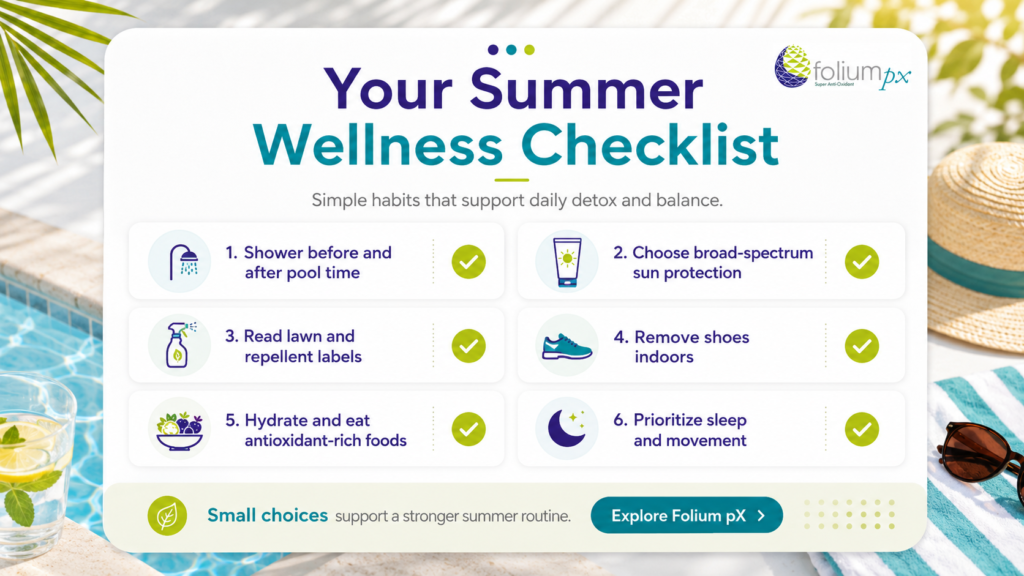
Reducing hidden summer chemical exposures does not require a complicated routine. Small choices can help lower unnecessary contact while supporting your body consistently.
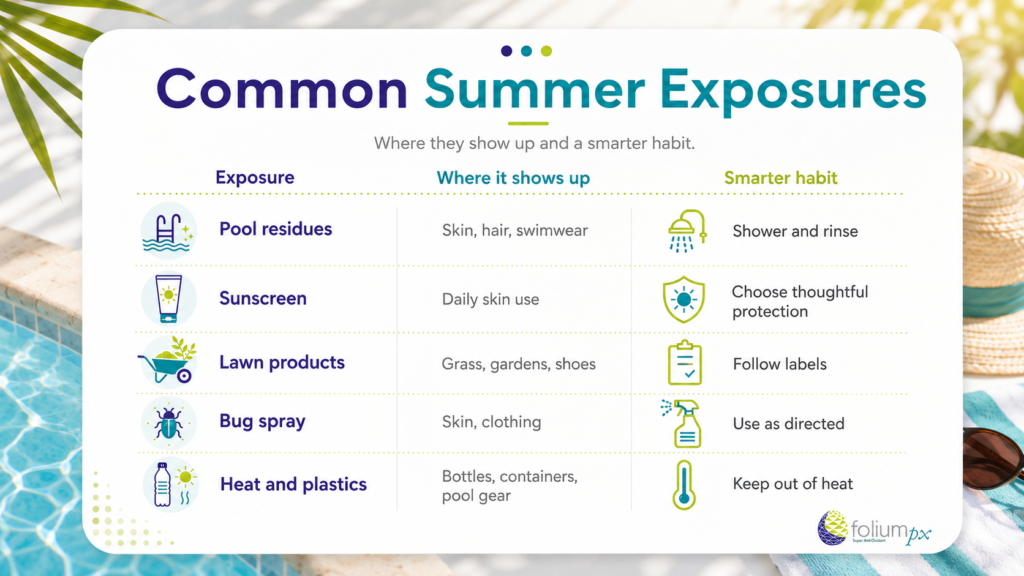
| Summer Exposure | Where It Shows Up | Smarter Habit |
| Pool chemical residues | Pools, swimwear, towels, hair, skin | Shower before and rinse after swimming |
| Sunscreen ingredients | Daily skin application | Choose broad-spectrum options and layer with hats and shade |
| Pesticides and herbicides | Lawns, gardens, parks, patios | Follow labels, avoid wet treated areas, wash hands |
| Bug sprays | Skin, clothing, camping gear | Use as directed and wash off after outdoor time |
| Heat and plastics | Bottles, food containers, pool toys | Keep plastics out of extreme heat when possible |
| Outdoor dust | Shoes, pets, patio surfaces | Remove shoes and clean high-touch areas |
Your Summer Exposure-Reduction Checklist
Use this checklist as a simple guide during pool days, gardening days, travel days, and outdoor gatherings.
- Shower before and after pool use.
- Choose sun protection that includes shade, hats, and clothing.
- Read labels on sunscreen, repellents, and lawn products.
- Keep chemical products away from children and pets.
- Avoid walking barefoot on recently treated lawns.
- Wash hands after gardening or yard work.
- Remove shoes at the door.
- Wipe pet paws after time on treated grass or dusty areas.
- Use glass or stainless steel bottles when practical.
- Keep food and drinks out of direct heat.
- Hydrate steadily during outdoor days.
- Add antioxidant-rich foods to summer meals.
- Prioritize sleep after long days in the sun.
- Move gently to support circulation and lymphatic flow.
The goal is not to eliminate every exposure. That is not realistic. The goal is to reduce what you can control and support your body with steady, practical habits.
Where Folium pX Fits Into a Summer Wellness Routine
Folium pX is designed to fit into everyday life. During summer, that life may include pool days, sunscreen, outdoor meals, gardening, travel, long evenings, and more exposure to heat and environmental stressors.
Folium pX is positioned for toxic heavy metals, full body detox, and free radicals support. It can complement a summer routine built around hydration, antioxidant-rich foods, movement, sleep, and exposure reduction.
A balanced summer wellness routine may include:
- Cleaner product choices when practical
- Smart sun protection
- Safe pool habits
- Careful pesticide and repellent use
- Hydration and minerals
- Fiber-rich meals
- Antioxidant-rich foods
- Movement and sweating in a healthy way
- Restorative sleep
- Daily supplement support
Folium pX should not be used as a replacement for sunscreen, safe pool practices, pesticide safety, or professional medical guidance. Supplements work best when paired with consistent healthy habits.
The Folium pX Product Line
Folium pX also offers formulas that support different wellness goals:
- Folium pX for toxic heavy metals, full body detox, and free radicals support
- Folium Immuno for inflammation and immunity support
- Folium Relax for focus, stress, mind, and immunity boost support
For best results, we recommend using Folium pX as part of a consistent wellness routine that also includes hydration, antioxidant-rich foods, movement, sleep, and mindful exposure reduction.
When using Folium pX with other products in our line, follow the recommended usage guidance on our How To Guide. Folium pX should be taken separately from Folium Relax and Folium Immuno, while Folium Relax and Folium Immuno may be taken together.
As with any supplement, speak with your healthcare professional before use if you are pregnant, nursing, taking medication, or managing a medical condition.
Final Takeaway: Enjoy Summer, Reduce What You Can, Support Your Body Daily
You do not need to avoid summer to live well. Pool days, sunshine, gardening, backyard meals, and outdoor activities can all be part of a healthy lifestyle.
The key is awareness. Shower before and after swimming. Choose thoughtful sun protection. Follow labels on lawn and pest products. Keep plastics out of extreme heat when practical. Hydrate steadily. Eat colorful foods. Prioritize sleep and movement. Support your body’s natural detox pathways daily.
At Folium pX, our goal is to help you enjoy the moments you love while giving your body steady wellness support.
This summer, support your body with hydration, antioxidants, mindful exposure reduction, and daily detox support from Folium pX. You can also explore the full Folium pX supplement line to build a routine that supports detox, free radicals support, immune wellness, stress balance, and whole-body vitality.
Further Reading
- Chloramines and Pool Operation: A CDC resource explaining how chlorine can react with body waste in pools to form chloramines, which may irritate the skin, eyes, and respiratory tract.
- Pool Chemical Safety: A CDC guide explaining why pool chemicals are used, how they help protect swimmers, and why careful pool maintenance matters.
- Sunscreen: How to Help Protect Your Skin from the Sun: FDA guidance on broad-spectrum sunscreen, storage, application, sun protection habits, and why sunscreen should be protected from heat and direct sun.
- Tips to Stay Safe in the Sun: From Sunscreen to Sunglasses: FDA consumer guidance on sunscreen, sunglasses, shade, broad-spectrum SPF, and practical sun safety steps for daily outdoor protection.
- Find the Repellent That Is Right for You: EPA’s search tool helps people choose an insect repellent based on pests, protection time, active ingredients, and product details.


