
Fall Air Quality and Your Health: How to Reduce Exposure to Smoke, Dust, and Everyday Pollutants

Cooler days can make fall feel like the perfect time to open the windows, spend more time outdoors, and tackle seasonal yard work. Yet autumn can also bring a changing mix of airborne exposures. Depending on where you live, wildfire smoke, fine particulate matter, ragweed pollen, mold spores, dust, and everyday indoor pollutants can all affect the quality of the air around you.
At Folium pX, we believe awareness is a practical part of a low-toxin lifestyle. You cannot remove every environmental exposure, and you do not need to live in fear of the air you breathe. What you can do is pay attention to current conditions, reduce avoidable exposure, and make your home environment more supportive.
If you want a deeper look at pollutants inside the home, our indoor air quality guide explains common sources such as particulate matter, VOCs, moisture, combustion byproducts, and dust.
Key Takeaways
- Fall air quality can change quickly. Wildfire smoke, ragweed pollen, mold spores, dust, and everyday indoor pollutants can all affect the air around you.
- Wildfire smoke can travel long distances. You can experience smoke-related air quality issues even when an active fire is hundreds or thousands of miles away.
- Checking the AQI can help you plan your day. Use current air quality information before exercising outdoors, doing yard work, or opening windows when smoke or pollution is a concern.
- Cleaner indoor air starts with reducing pollution at the source. During smoke events, keeping windows closed, using appropriate filtration, and limiting particle-generating activities can help reduce exposure.
- General wellness habits complement, but do not replace, clean-air precautions. Hydration, nutritious foods, movement, sleep, and stress management can support overall wellness, while exposure reduction should remain the priority when air quality is poor.
Did you know? Wildfire smoke can travel hundreds or even thousands of miles from the fire itself. Have you ever noticed smoky or hazy air in your area when no wildfire was nearby?
Why Fall Air Quality Deserves Attention
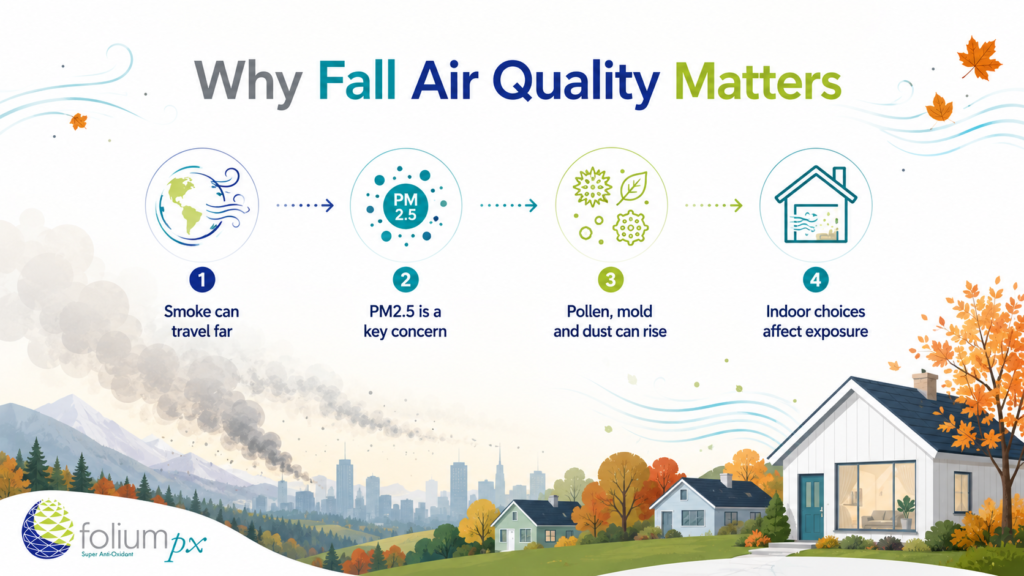
Fall air quality is highly regional. A clear October day in one state may look very different from the same date somewhere affected by wildfire smoke, dry weather, high pollen, or agricultural activity.
Wildfire Smoke Can Travel Far From a Fire
Wildfires and prescribed fires can affect air quality well beyond the immediate fire zone. Smoke can move long distances with changing weather patterns, sometimes affecting communities hundreds or thousands of miles away.
That means you may experience smoky or hazy air even when there is no visible fire nearby. It also means distance from a wildfire is not, by itself, a reliable measure of your local air quality.
Ragweed Remains Active Into Fall
Ragweed is a major seasonal allergen. The National Institute of Environmental Health Sciences reports that ragweed pollen season generally runs from August to November, with pollen levels typically peaking around mid-September in many parts of the United States.
For people with seasonal allergies, this can make the transition from summer to fall particularly noticeable.
Outdoor Mold Can Also Rise
Mold exists naturally outdoors, especially on damp materials and decaying organic matter. Outdoor mold reaches some of its highest levels during summer and fall.
Fallen leaves, damp vegetation, and wet organic debris can therefore be relevant for people who are sensitive to mold.
Dust Can Be Stirred Into the Air
Dry soil, road dust, landscaping activity, and seasonal cleanup can put settled particles back into the air. The issue may be especially noticeable when conditions are dry or when a cleanup project creates visible dust.
For more practical ways to reduce unnecessary exposure around your living space, see our guide to creating a cleaner home for better health.
Wildfire Smoke and PM2.5: What Is Actually in the Air?
Wildfire smoke is not a single pollutant. It is a complex mixture of particles and gases produced when vegetation, buildings, and other materials burn.
The EPA identifies fine particulate matter, or PM2.5, as the pollutant of greatest health concern in wildfire smoke. PM2.5 refers to fine inhalable particles with an aerodynamic diameter generally 2.5 micrometers or smaller. Because these particles are so small, they can be inhaled deeply into the lungs.
Smoke may also contain carbon monoxide, volatile organic compounds, nitrogen oxides, water vapor, and other compounds. The exact mixture varies according to what is burning and the conditions of combustion.
A smoky smell or visible haze can alert you to a problem, but sight and smell should not be your only guide. Smoke can move long distances, and air quality can change during the day. Checking current conditions gives you more useful information than assuming the air is safe simply because a fire is far away.
Know the Air Quality Index
The U.S. Air Quality Index is an EPA tool for communicating outdoor air quality and levels of health concern. Higher AQI values indicate more pollution and a greater potential health concern.
| AQI | Category | What It Means |
| 0 to 50 | Good | Air quality is satisfactory and pollution poses little or no risk. |
| 51 to 100 | Moderate | Air quality is acceptable, although some unusually sensitive people may be affected. |
| 101 to 150 | Unhealthy for Sensitive Groups | Members of sensitive groups may experience health effects. |
| 151 to 200 | Unhealthy | Some people in the general public may experience effects, with greater concern for sensitive groups. |
| 201 to 300 | Very Unhealthy | The risk of health effects is increased for everyone. |
| 301 and higher | Hazardous | Emergency health conditions are possible, and everyone is more likely to be affected. |
During wildfire events, the AirNow Fire and Smoke Map can provide localized information about fine-particle pollution and smoke conditions.
Fall Pollen, Mold, and Dust Exposure
Wildfire smoke can dominate the conversation about seasonal air quality, but everyday fall exposures deserve attention too.
Ragweed Pollen
For someone with a ragweed allergy, fall can bring sneezing, congestion, a runny nose, and irritated or watery eyes. Pollen can also enter indoor spaces through open windows and doors or be carried inside on clothing.
If pollen is a problem for you, pay attention to local conditions and follow guidance from your healthcare professional. Reducing unnecessary outdoor exposure during high-pollen periods may be helpful for people who are sensitive.
Mold and Decaying Vegetation
Mold plays an important ecological role by breaking down organic matter. Problems can arise when exposure triggers an allergic or irritant response in sensitive individuals or when mold begins growing indoors because of excess moisture.
Outside, damp piles of leaves and decaying vegetation can contain mold. Indoors, leaks, humidity, and wet materials can create conditions that allow mold growth.
If you have moisture problems inside your home, address the water source rather than trying to cover a musty smell with fragrance.
Dust From Seasonal Cleanup
Dust can become airborne when dry material is disturbed. If you are cleaning a dusty garage, patio, shed, entryway, or similar space, try to avoid creating a visible cloud of dust.
Useful habits include:
- Remove shoes near the entrance.
- Damp-mop hard indoor floors instead of dry sweeping when practical.
- Vacuum carpets and rugs regularly.
- Clean tracked-in dirt and soil.
- Keep doors and windows closed when outdoor particle levels are elevated.
- Clean frequently used entry areas so outdoor debris does not spread through the home.
Our spring detox checklist also includes simple ideas for reducing household exposure as part of an everyday wellness routine.
Everyday Indoor Pollutants Still Matter
When the weather cools, people may spend more time indoors, making the home environment an important part of the air-quality picture.
Common indoor pollution sources can include:
- Cooking smoke and particles
- Tobacco smoke
- Candles and fireplaces
- Gas or other fuel-burning appliances
- Cleaning products and air fresheners
- Paints, solvents, furniture, and building materials that release VOCs
- Dust and tracked-in soil
- Dampness and mold
- Outdoor pollution that enters the home
The basic strategy is straightforward: reduce pollution at the source, ventilate when outdoor conditions are suitable, and use filtration where it adds value.
Ventilation Depends on Outdoor Conditions
Opening windows can help dilute certain indoor pollutants when the outdoor air is relatively clean.
During a wildfire smoke event, however, opening those same windows can allow more fine particles to enter the home. This is why ventilation should be based on current outdoor conditions instead of following the same routine every day.
Source control also matters. If you can avoid producing pollutants indoors in the first place, there is less material for your ventilation or filtration system to manage.
How Smoke, Pollen, and Mold Can Affect Health
Different airborne exposures affect the body in different ways, so it is important not to group every fall air-quality issue under a single health claim.
Wildfire Smoke
Wildfire smoke can irritate the eyes, nose, throat, and lungs. CDC guidance notes that smoke can contribute to coughing, wheezing, and difficulty breathing.
Smoke can make anyone sick, but some people have a higher risk of health problems, including:
- Children
- Pregnant people
- People with asthma
- People with COPD
- People with heart disease
- People with diabetes
- People with chronic kidney disease
Pollen
Pollen is an allergen rather than the same type of pollutant as wildfire smoke. In people with seasonal allergies, exposure can contribute to sneezing, nasal congestion, a runny nose, and itchy or watery eyes.
Mold
Mold exposure can cause allergic or irritant responses in susceptible individuals. Mold may also worsen asthma symptoms for some people.
Pay attention to your individual symptoms and medical needs. Significant breathing difficulty, chest pain, or worsening of an existing heart or lung condition deserves prompt medical attention.
7 Practical Ways to Reduce Fall Air-Pollution Exposure
1. Check Air Quality Before Outdoor Plans
Make the AQI part of your routine when smoke or pollution is possible.
Check conditions before a long walk, run, sports practice, yard project, or other extended outdoor activity. AirNow can also show whether conditions are improving or worsening.
2. Modify Activities When Air Quality Worsens
When AQI levels rise, follow AirNow recommendations for your category and health status.
Depending on conditions, that may mean:
- Moving strenuous exercise indoors
- Changing the time of your activity
- Shortening the time spent outdoors
- Choosing a location with better air
- Taking additional precautions if you belong to a sensitive group
3. Keep Wildfire Smoke Outside
When wildfire smoke is affecting your area, keep doors and windows closed as much as practical.
If your cooling or ventilation system has a recirculate setting, EPA guidance recommends using it to help limit the amount of outside smoke entering the home.
Always follow evacuation orders and local emergency guidance when a wildfire creates an immediate safety threat.
4. Use Filtration Appropriately
A portable air cleaner can help reduce airborne particles when it is properly sized for the room.
For particle removal, look at the unit’s Clean Air Delivery Rate, or CADR, and choose a model suited to the area you want to filter.
For central HVAC systems, EPA guidance recommends a MERV 13 filter, or the highest efficiency filter the system can accommodate. If you are unsure what your system can handle, an HVAC professional can help determine a suitable option.
5. Reduce Particle-Generating Activities Indoors
During a smoke event, avoid adding unnecessary particles to indoor air.
Where practical, limit:
- Smoking
- Burning candles
- Fireplace use
- Other unnecessary indoor combustion
Cooking can also generate particles. Use appropriate kitchen exhaust when possible, while being mindful of whether a system draws smoky outdoor air inside.
6. Control Settled Dust
Dust on floors and surfaces can be stirred back into the air.
Use damp cleaning methods where practical, keep entry areas clean, and vacuum routinely. Removing shoes at the door can also reduce tracked-in soil and outdoor residues.
7. Keep Filters Maintained
A dirty filter cannot perform as intended.
Check air-cleaner and HVAC filters regularly and replace them according to manufacturer guidance. During periods of heavy wildfire smoke, filters may become dirty more quickly than usual and may need more frequent replacement.
Support General Wellness While Reducing Exposure
Reducing exposure comes first. No food, hydration routine, antioxidant, or dietary supplement should be presented as a way to block PM2.5 from entering the lungs or as a replacement for clean-air precautions.
At Folium pX, we still believe the foundations of general wellness matter. A consistent routine can include:
- Drinking enough water for your individual needs
- Eating a varied, nutrient-dense diet
- Including colorful fruits and vegetables
- Staying active when air conditions are appropriate
- Prioritizing restorative sleep
- Managing stress in realistic ways
For more on hydration as part of a broader wellness routine, read our guide to water, electrolytes, and minerals during a cleanse.
Where Folium pX Fits
Folium pX is a plant-based nutraceutical that we position for toxic heavy metals, full body detox, and free radicals support. Our formula includes plant-based ingredients such as pine bark extract and grape seed extract.
We see Folium pX as one part of a broader low-toxin lifestyle. It is not a substitute for reducing environmental exposure, using appropriate air filtration, following wildfire instructions, or seeking professional medical care.
If you would like to learn more about our current product range, you can explore Folium pX products.
Folium products are dietary supplements and are not intended to diagnose, treat, cure, or prevent any disease. Always speak with your healthcare provider before starting a new supplement, particularly if you are pregnant, nursing, taking medication, or managing a medical condition.
Make Air Quality Part of Your Fall Routine
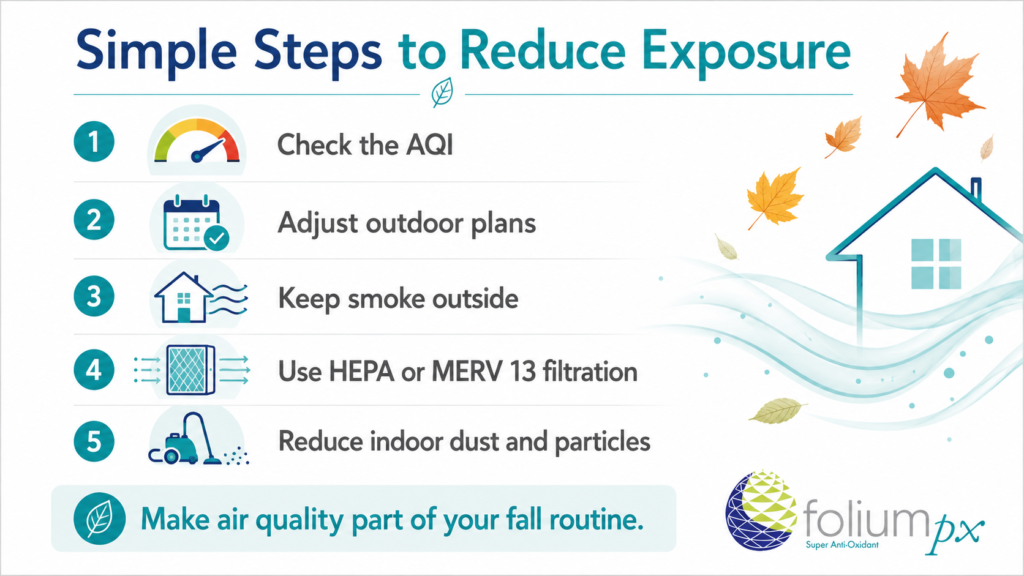
Fall air quality can change from one day to the next. Wildfire smoke may travel from distant fires, ragweed can remain active well into autumn, outdoor mold can be high, and ordinary household activities can add particles and gases to indoor air.
The goal is not perfection. Start with information and practical choices.
Check the AQI. Change outdoor plans when conditions call for it. Keep smoke outside. Use appropriate filtration. Control indoor pollution sources. Clean dust without unnecessarily stirring it into the air.
At Folium pX, we believe reducing avoidable exposure and supporting healthy daily habits can work side by side. Cleaner air is not something a supplement can replace. It starts with the environment around you and the choices you make each day.