
Summer grilling brings people together. The smell of food on the grill, the sound of friends gathering outside, and the simple pleasure of eating in the sun are all part of what makes BBQ season feel special.
At Folium pX, we believe wellness should support real life, not replace it. That means you do not have to give up your favorite summer meals to care for your body. Instead, you can make smarter choices that help reduce unnecessary toxin exposure while supporting the natural detox pathways your body already uses every day.
Grilling can be part of a balanced lifestyle, but certain BBQ habits may add to your overall toxin load. High heat, smoke, charred meats, processed foods, sugary sauces, alcohol, dehydration, and low-fiber meals can all create extra stress for the body.
The good news is that small changes can make a meaningful difference. By adjusting how you grill, building a more antioxidant-rich plate, staying hydrated, and supporting your body consistently, you can enjoy summer BBQ while helping your body stay energized, balanced, and resilient.
Key Takeaways
- Summer BBQ can be part of a healthy lifestyle when you reduce heavy charring, limit excess smoke, and use smarter grilling techniques.
- High-heat cooking and smoke exposure can create compounds like HCAs and PAHs, especially when meats are cooked until well done or heavily charred.
- Antioxidant-rich foods, herbs, colorful vegetables, fiber, and hydration can help support the body’s natural detox pathways during BBQ season.
- Simple habits like marinating proteins, choosing leaner cuts, grilling more vegetables, and trimming burnt portions can help reduce unwanted exposure.
- Folium pX can be used as part of a broader summer wellness routine focused on detox support, free radicals support, hydration, movement, rest, and balanced nutrition.
Did you know? Marinating meat, poultry, or fish for at least 30 minutes before grilling may help reduce the formation of HCAs. What is your favorite healthy BBQ marinade?
What “Toxin Load” Means During BBQ Season
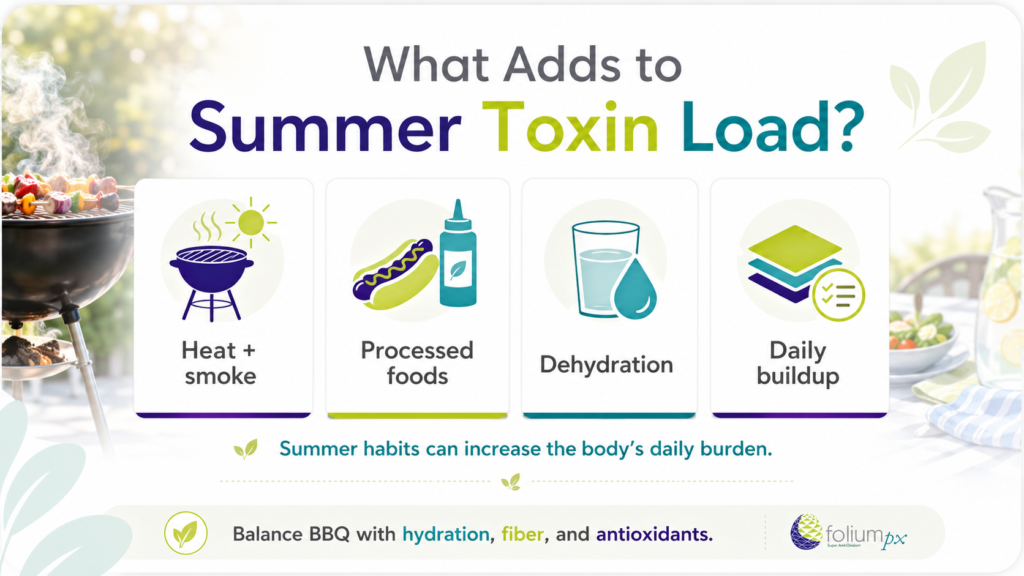
Your toxin load refers to the total amount of environmental, dietary, and lifestyle exposures your body processes over time. It is not usually about one meal or one cookout. It is the daily accumulation of exposures from food, air, water, household products, stress, alcohol, poor sleep, and environmental contaminants.
During summer, toxin load can increase in subtle ways. People often spend more time outdoors, travel more, sweat more, drink less water, eat more processed snacks, and attend more gatherings where grilled meats, sugary drinks, and alcohol are common.
A summer BBQ meal might include:
- Charred or heavily browned meats
- Processed meats like hot dogs or sausages
- Sugary sauces and marinades
- Refined side dishes
- Alcohol or soda
- Lower vegetable and fiber intake
- Less water than the body needs in warm weather
None of these mean BBQ is automatically unhealthy. The issue is frequency, balance, and how much support your body receives before and after.
Your body is designed to process and eliminate waste through the liver, kidneys, digestive system, lungs, skin, and lymphatic system. These pathways work every day, but they depend on hydration, minerals, fiber, antioxidants, protein, movement, and rest.
For more daily wellness ideas, read our guide to Spring Detox Checklist: 7 Simple Ways to Reduce Your Toxic Load This Season.
How Grilling Can Add to Your Body’s Daily Burden
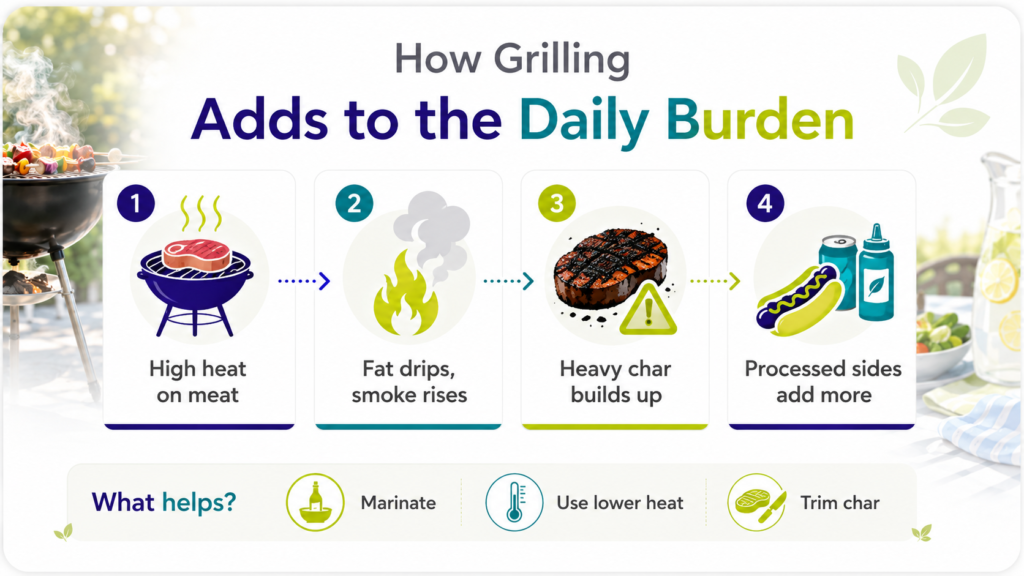
Grilling is one of the most popular summer cooking methods, but the way food is grilled matters. High-temperature cooking and smoke exposure can create compounds that are best minimized when possible.
HCAs From High-Heat Cooking
Heterocyclic amines, often called HCAs, can form when muscle meats such as beef, pork, poultry, or fish are cooked at high temperatures. They are more likely to form when meat is cooked for a long time, cooked directly over high heat, or cooked until very well done.
This does not mean you need to avoid grilled meat completely. It simply means cooking method matters. Lower heat, shorter cooking time, marinades, and frequent flipping can help create a smarter grilling routine.
PAHs From Smoke and Fat Drippings
Polycyclic aromatic hydrocarbons, or PAHs, can form when fat and juices drip onto flames or hot coals. This creates smoke, which can rise and settle back onto the food.
Flare-ups, heavy smoke, and blackened surfaces can increase unwanted exposure. Choosing leaner cuts, trimming visible fat, using indirect heat, and avoiding direct flames can help reduce smoke and charring.
Charred and Burnt Areas
Many people enjoy the flavor of grilled food, but heavily blackened or burnt portions are not the best choice for daily wellness. If part of your food becomes charred, trim it off before eating.
The goal is not perfection. The goal is simple reduction. Less charring, less smoke, and more balance can help you enjoy BBQ while reducing unnecessary burden on the body.
Your Body’s Natural Detox Pathways After a BBQ Meal
Detox is not something that only happens during a cleanse. Your body is always detoxifying. Every day, your internal systems process, transform, and eliminate compounds the body no longer needs.
After a heavier BBQ meal, these pathways become especially important.
Liver
The liver helps process compounds that enter the body from food, drink, and the environment. It also supports bile production, which plays a role in digestion and waste elimination.
Kidneys
The kidneys help filter the blood and remove water-soluble waste through urine. Hydration is essential for this pathway, especially during hot summer months.
Digestive System
Your digestive system helps move waste out of the body through regular bowel movements. Fiber, water, and healthy gut function all matter here.
Skin
Sweating is not a “quick detox fix,” but it is part of the body’s natural temperature regulation and fluid balance. When you sweat more in summer, you also need to replace fluids and minerals.
Lungs
Your lungs help clear airborne irritants and metabolic byproducts. This is especially relevant around smoke, pollution, and outdoor air exposure.
Lymphatic System
The lymphatic system supports fluid movement and immune function. Gentle movement, hydration, and deep breathing can all support healthy lymphatic flow.
A BBQ meal does not need to derail your wellness routine. The key is to support these pathways consistently with water, minerals, fiber, antioxidant-rich foods, movement, and quality sleep.
For more on antioxidant detox support, visit Detoxifying Naturally: How Antioxidants Aid in Heavy Metal Detox.
Why Antioxidants Matter During BBQ Season
Free radicals are unstable molecules that can contribute to oxidative stress when they build up faster than the body can balance them. Everyday life can increase free radical activity, including smoke exposure, high-heat cooking, pollution, stress, alcohol, poor sleep, and environmental toxins.
Antioxidants help support the body’s natural defense against free radicals. This is why colorful plant foods, herbs, and targeted antioxidant support are valuable during summer.
Antioxidant-rich foods that pair well with BBQ include:
- Berries
- Citrus fruits
- Leafy greens
- Pomegranate
- Bell peppers
- Tomatoes
- Garlic and onions
- Green tea
- Fresh herbs like rosemary, oregano, thyme, basil, parsley, and cilantro
At Folium pX, antioxidant support is central to our wellness philosophy. Folium pX is positioned for toxic heavy metals, full body detox, and free radicals support. Our formula highlights plant-based ingredients, including pine bark extract and grape seed extract, as part of a daily routine that supports antioxidant defenses and natural detox pathways.
To learn more about one of our key ingredients, visit Pine Bark Extract: Nature’s Hidden Gem for Health.
Smart Grilling Tips to Reduce Unwanted Compounds
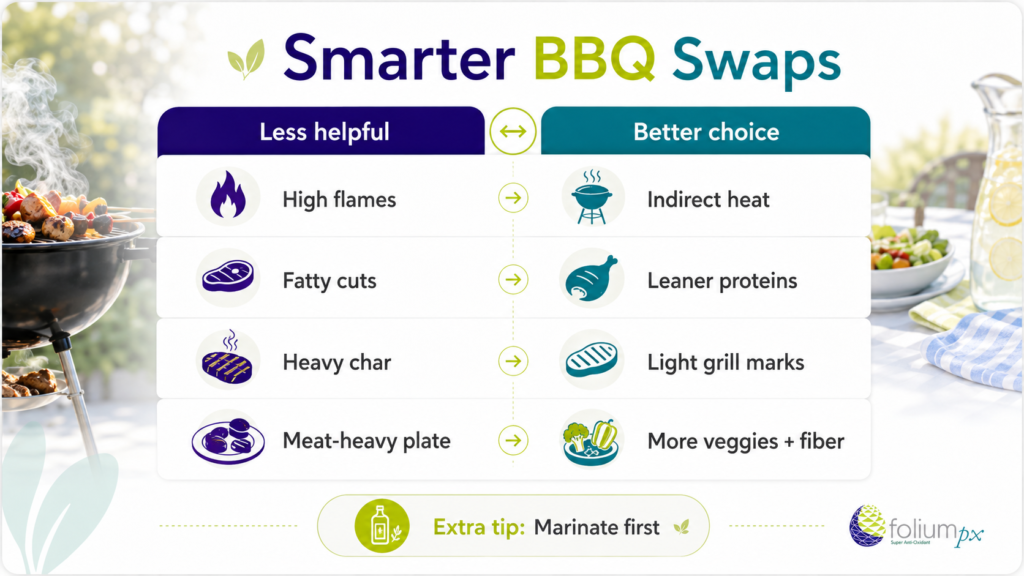
You can reduce grilling-related toxin exposure without giving up flavor. Small technique changes can help lower smoke, charring, and high-heat stress.
| BBQ Habit | Why It Matters | Smarter Swap |
| Grilling meat over high flames | More heat and flare-ups can increase unwanted compounds | Use lower heat or indirect grilling |
| Cooking meat until heavily charred | Burnt areas may contain more unwanted compounds | Remove charred portions before eating |
| Skipping marinades | Marinades may help reduce HCA formation | Marinate meat, poultry, or fish for at least 30 minutes |
| Using fatty cuts directly over flames | Fat drippings can create smoke and flare-ups | Choose leaner cuts or trim visible fat |
| Eating mostly meat and refined sides | Low fiber can slow digestive support | Add vegetables, beans, salads, and water-rich fruits |
| Drinking only alcohol or soda | Summer heat increases hydration needs | Alternate with water or mineral-rich drinks |
1. Marinate Before Grilling
A marinade can do more than add flavor. Marinades made with citrus, vinegar, olive oil, garlic, and herbs can support a better grilling process.
Try ingredients like:
- Lemon juice or lime juice
- Apple cider vinegar
- Olive oil
- Garlic
- Rosemary
- Oregano
- Thyme
- Turmeric
- Black pepper
- Parsley or cilantro
Let meat, poultry, or fish marinate for at least 30 minutes before grilling.
2. Avoid Heavy Charring
Use lower heat when possible. Move food away from direct flames. If something burns, trim off the blackened portion before serving.
3. Flip More Often
Turning food more frequently can help reduce prolonged overheating on one surface. It also helps food cook more evenly.
4. Choose Leaner Cuts
Leaner proteins create fewer fat drippings, which may reduce flare-ups and smoke. You can also trim visible fat before grilling.
5. Use Indirect Heat
Instead of placing food directly over flames, move it to the side of the grill. Indirect heat can help cook food more gently and evenly.
6. Pre-Cook Thicker Meats
Chicken pieces, ribs, or thicker cuts can be partially cooked in the oven or on the stove before finishing on the grill. This reduces time over high heat.
7. Clean Your Grill Grates
Old residue can stick to fresh food. Clean grill grates before cooking to reduce buildup and improve flavor.
8. Grill More Vegetables
Vegetables do not form HCAs in the same way muscle meats do. Add zucchini, mushrooms, onions, peppers, asparagus, eggplant, corn, pineapple, or tomatoes to the grill.
Build a Detox-Supportive BBQ Plate
A detox-supportive BBQ plate is colorful, balanced, hydrating, and rich in fiber. You do not need complicated rules. Start with proportions.
A Simple BBQ Plate Formula
- Half the plate: Fresh or grilled vegetables
- One quarter: Lean protein or plant-based protein
- One quarter: Fiber-rich carbohydrates
- Add flavor: Herbs, citrus, spices, fermented foods, and healthy fats
- Hydrate: Water, sparkling water, or a low-sugar mineral drink
Better BBQ swaps can include:
- Grilled chicken, fish, turkey burgers, or veggie skewers instead of processed hot dogs
- Homemade herb and citrus marinades instead of sugary bottled sauce
- Bean salad or vegetables with hummus instead of chips
- Sparkling water with lemon, cucumber, mint, or berries instead of soda
- Fruit salad instead of heavy desserts
Fiber is especially important because it supports digestion and regular elimination. Beans, lentils, vegetables, berries, oats, chia seeds, and whole grains can all help create a more balanced summer meal.
For more on modern environmental exposures, read Microplastics and Your Health: The Emerging Toxin You Can’t Ignore.
Hydration, Minerals, and Summer Heat
BBQ season often means heat, sweat, travel, and longer days outdoors. Hydration becomes especially important because water supports normal kidney function, digestion, circulation, energy, and temperature regulation.
Dehydration can leave you feeling sluggish, foggy, bloated, overheated, or tired after a heavy meal. Alcohol and sugary drinks can make hydration more difficult, especially in hot weather.
Try these simple hydration habits:
- Drink water before the BBQ starts.
- Keep a water bottle nearby while grilling.
- Add lemon, cucumber, berries, mint, or electrolytes.
- Eat water-rich foods like watermelon, cucumber, oranges, lettuce, and tomatoes.
- Alternate alcoholic drinks with water.
- Include mineral-rich foods like leafy greens, avocado, beans, and sea salt in moderation.
Hydration works best when paired with fiber. Water helps the digestive system move waste through the body, while fiber adds bulk and supports regular elimination.
Where Folium pX Fits Into a Summer Wellness Routine
Folium pX is designed to fit into real-life wellness routines. During summer, that might mean BBQs, travel, family gatherings, outdoor activity, and occasional indulgence.
Folium pX is positioned for toxic heavy metals, full body detox, and free radicals support. It is a plant-based supplement that can be used as part of a broader lifestyle focused on antioxidant support, natural detox pathways, hydration, rest, movement, and balanced nutrition.
Folium pX does not replace healthy habits. It complements them.
A summer wellness routine may include:
- Smart grilling techniques
- More vegetables and fiber
- Antioxidant-rich herbs and fruits
- Daily hydration
- Regular movement
- Quality sleep
- Stress support
- Consistent supplement support
Folium pX can be paired with a lifestyle that helps your body handle daily environmental and dietary exposures. To explore the formula, visit the Folium pX product page.
The Folium pX Product Line
Folium pX also offers formulas that support different wellness goals:
- Folium pX for toxic heavy metals, full body detox, and free radicals support
- Folium Immuno for inflammation and immunity support
- Folium Relax for focus, stress, mind, and immunity boost support
Post-BBQ Reset: What to Do the Next Day
A BBQ-heavy weekend does not require guilt or extreme restriction. A simple reset can help you return to balance.
Morning Reset
Start your morning with water. Add lemon or electrolytes if needed. Choose a fiber-rich breakfast such as oats with berries, chia pudding, yogurt with fruit, eggs with greens, or a smoothie with leafy vegetables.
A short walk can also support circulation, digestion, and energy.
Midday Reset
Build a colorful lunch with vegetables, lean protein, herbs, citrus, and healthy fats. A large salad with grilled chicken, beans, avocado, lemon, and herbs is a simple option.
Focus on foods that feel light but nourishing.
Evening Reset
Keep dinner simple. Choose vegetables, protein, and fiber. Avoid another meal built around processed meats, heavy sauces, or charred foods.
Create a calming bedtime routine. Sleep is one of the most important foundations for natural recovery and whole-body wellness.
All-Day Reset Habits
- Hydrate steadily.
- Eat colorful foods.
- Move gently.
- Prioritize fiber.
- Avoid guilt.
- Return to consistency.
If you often feel drained after high-exposure days, read The Energy Crisis You Don’t Feel: How Toxins May Be Draining Your Vitality.
Final Takeaway: Grill Smarter and Support Your Body Daily
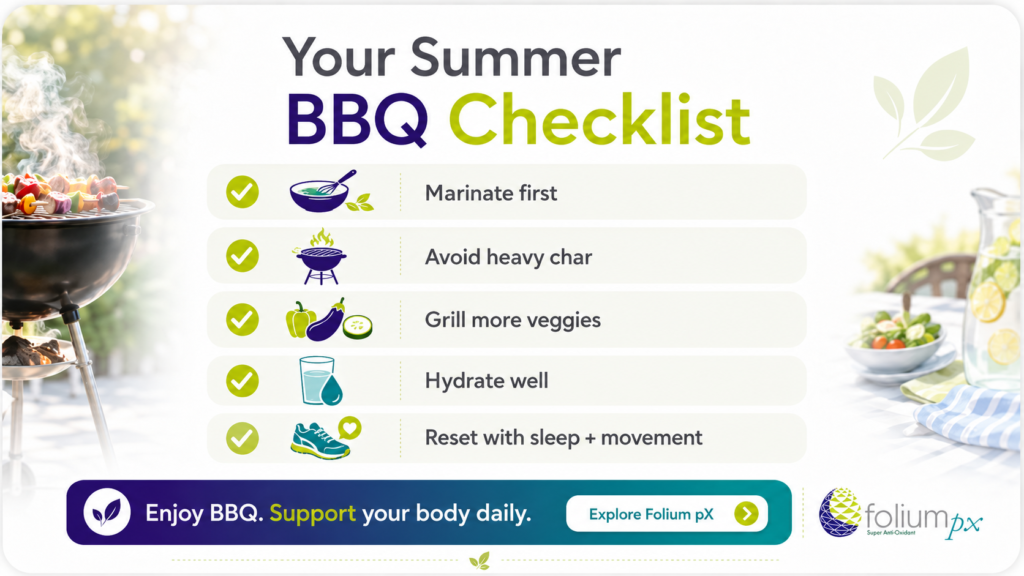
Summer BBQ can be part of a healthy lifestyle when you approach it with balance. You do not need to avoid every grilled food or skip every gathering. Instead, focus on smarter cooking methods, more colorful foods, better hydration, and consistent support for your body’s natural detox pathways.
Marinate before grilling. Avoid heavy charring. Use indirect heat. Add more vegetables. Drink more water. Support your body with antioxidants, fiber, minerals, sleep, and movement.
At Folium pX, our goal is to help you feel supported in everyday life. This summer, enjoy the foods and moments you love while giving your body the daily wellness support it deserves.
Explore Folium pX or shop the full Folium pX supplement line to build a routine that supports detox, antioxidant defenses, immune wellness, stress balance, and whole-body vitality.
Further Reading
- Chemicals in Meat Cooked at High Temperatures and Cancer Risk: A helpful guide from the National Cancer Institute explaining HCAs, PAHs, high-heat cooking, charring, and ways to reduce exposure.
- Practicing Safe Grilling Can Reduce Cancer Risk: A practical grilling resource from the American Institute for Cancer Research with tips on marinating, reducing charring, and adding more vegetables.
- Safe Summer Grilling Tips: Harvard Health shares approachable tips for reducing smoke and char exposure while keeping grilled meals flavorful and balanced.
- Build a Better Cookout: Harvard Health offers easy ideas for making cookouts more balanced with lean proteins, fruits, vegetables, and healthier grilling methods.