
How Movement Supports Your Body’s Natural Detox Pathways: Exercise, Circulation, and Lymphatic Health

Detoxification is not a one-time event. Your body is constantly processing nutrients, breaking down metabolic byproducts, filtering the blood, moving fluids, and eliminating waste. The liver, kidneys, digestive system, lungs, skin, circulatory system, and lymphatic system all contribute to this ongoing work in different ways.
Movement supports many of these normal processes. Exercise increases blood flow to working muscles, encourages regular muscle contractions, helps reduce long periods of inactivity, and contributes to the pressure changes that help lymph move through lymphatic vessels.
That does not mean exercise “flushes toxins” from the body on its own. A more accurate way to think about movement is as part of a broader wellness foundation that includes hydration, nutrition, sleep, and consistent daily habits.
At Folium pX, we believe sustainable routines matter. Small, repeatable choices can support the body far more effectively than short-term extremes.
Key Takeaways
- Regular movement supports healthy circulation and helps transport oxygen, nutrients, carbon dioxide, and metabolic byproducts throughout the body.
- Skeletal muscle contractions, breathing, and the lymphatic vessels’ own activity all contribute to normal lymph movement.
- Walking, strength training, mobility work, and moderate aerobic exercise can all support an active, balanced wellness routine.
- Sweating is primarily a cooling mechanism, so producing more sweat does not necessarily mean the body is detoxifying more effectively.
- Movement works best alongside hydration, balanced nutrition, adequate rest, and consistent daily habits that support the body’s natural processes.
Did you know? Your lymphatic system does not rely on a single central pump like the heart, so regular muscle movement and breathing both help support normal lymph flow.
What Are Your Body’s Natural Detox Pathways?
The body relies on several organs and systems to process, transport, and eliminate substances. Each has a distinct job, and no single pathway works in isolation.
The Liver
The liver plays a central role in metabolism. It processes nutrients, medications, alcohol, and many other compounds. It can chemically modify certain substances so they can be used, stored, or prepared for elimination.
This is one reason detoxification should not be reduced to a single food, supplement, sweat session, or cleanse. The body already has highly specialized systems carrying out this work every day.
The Kidneys
The kidneys continuously filter the blood. They remove waste products and excess water, helping form urine while also regulating fluid and electrolyte balance.
Healthy kidney function is one of the body’s most important routes for removing many water-soluble wastes and excess substances.
The Digestive System
The digestive tract is another important elimination route. It moves food through the body, absorbs nutrients, and helps eliminate material through stool.
Regular bowel function, adequate hydration, and an appropriate intake of fiber all contribute to normal digestive health.
The Lungs and Skin
The lungs remove carbon dioxide every time you exhale. The skin serves as a protective barrier and helps regulate body temperature.
Sweat is part of temperature control. Although trace amounts of some substances can appear in sweat, sweating should not be treated as the body’s primary detoxification pathway.
The Lymphatic System
The lymphatic system helps maintain tissue fluid balance, supports immune function, and returns lymphatic fluid toward the bloodstream.
It is sometimes described online as a system that “cleans toxins,” but that wording can oversimplify its actual role. A better description is that the lymphatic system transports fluid, immune cells, proteins, and other materials through a network of lymphatic vessels and lymph nodes.
For a broader look at these processes, read how natural detoxification works.
How Movement Supports Healthy Circulation
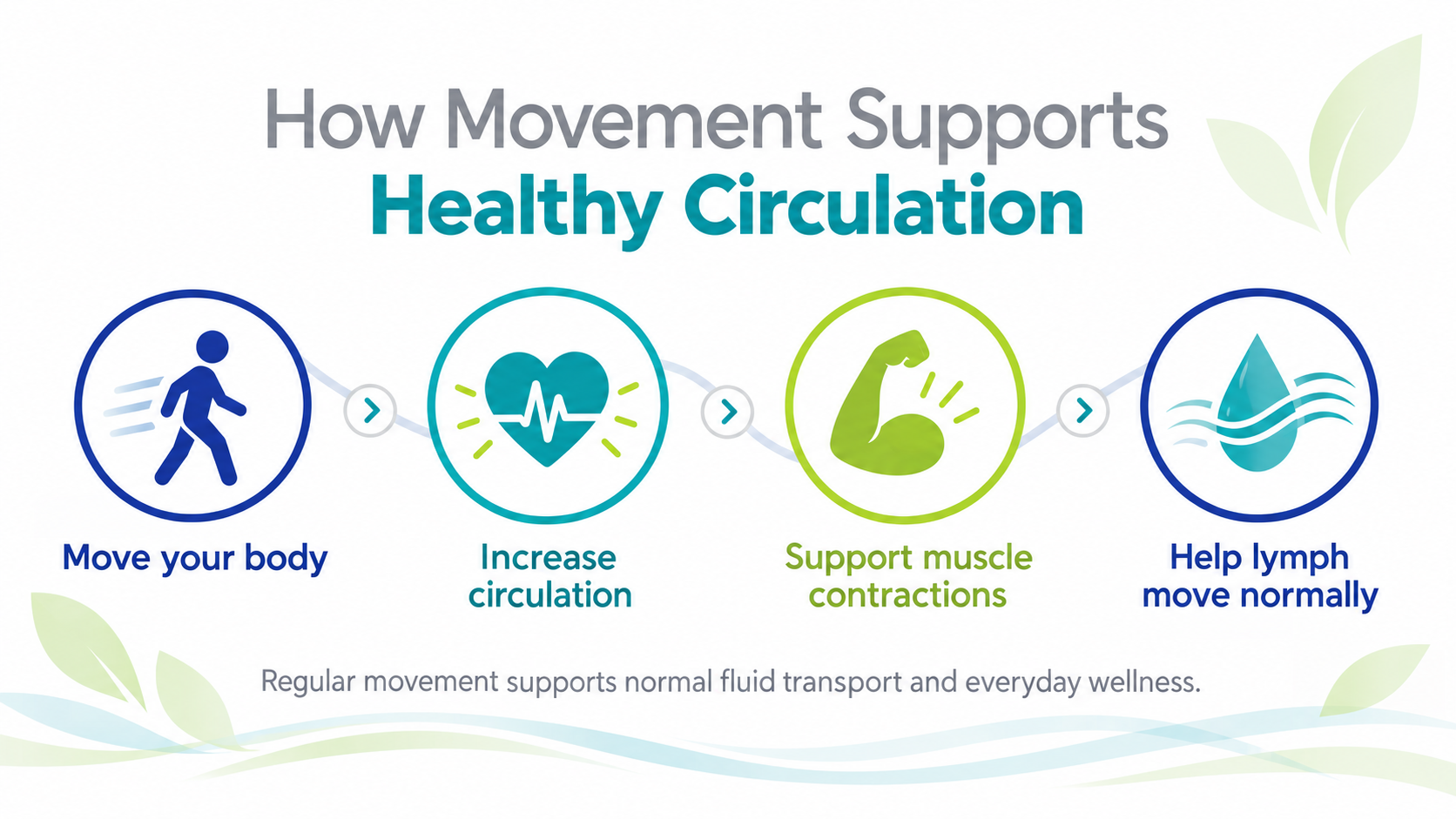
Physical activity creates immediate changes in the cardiovascular system.
As exercise intensity rises, heart rate and cardiac output increase. More blood is directed toward active skeletal muscles, where oxygen and nutrients are needed to support movement. Circulation also transports carbon dioxide and metabolic byproducts away from working tissues.
That does not mean blood is being “cleansed” by exercise. It means the cardiovascular system is doing what it is designed to do: moving oxygen, nutrients, hormones, heat, and metabolic products throughout the body.
Why Sitting Less Matters
A healthy movement routine does not have to consist only of formal workouts. Breaking up long periods of sitting can also support an active lifestyle.
Simple options include:
- Taking short walking breaks during the day
- Standing up after prolonged periods at a desk
- Using stairs when appropriate
- Stretching or doing gentle mobility work
- Walking as part of errands or daily routines
- Choosing active leisure activities instead of remaining seated for long periods
Public health guidance consistently emphasizes moving more and sitting less. Even modest activity is useful, especially for people who are currently inactive.
The Lymphatic System: Why Movement Matters
The lymphatic system is especially relevant when discussing movement because lymph transport depends on both internal and external forces.
Unlike the cardiovascular system, the lymphatic system does not rely on a single central pump like the heart. Collecting lymphatic vessels have their own rhythmic contractions, but external forces also help move lymph through the body.
These external forces include skeletal muscle contraction, breathing, movement of nearby arteries, and changes in pressure within the chest and abdomen.
Muscle Contractions Help Move Lymph
When muscles contract during walking, strength training, climbing stairs, or other movement, they create pressure around nearby tissues and vessels.
That pressure can help propel lymph through lymphatic vessels. One-way valves within the vessels help maintain directional flow and reduce backward movement.
This is one reason regular movement can be supportive of normal lymph transport without needing to be intense.
Breathing Contributes Too
Breathing changes pressure inside the chest and abdomen. Those pressure shifts can contribute to lymph movement, particularly as fluid travels through larger lymphatic vessels toward the central circulation.
Controlled breathing can therefore be part of a gentle movement routine, but it should not be promoted as a stand-alone “lymph detox.”
Movement Supports Normal Flow
The most useful takeaway is simple: the body benefits from regular movement.
Walking, changing position, contracting the major muscle groups, and avoiding long periods of inactivity all create mechanical activity that supports normal circulation and lymph transport.
If you are considering movement as part of a broader detox-focused routine, our heavy metal detox guide for beginners also discusses hydration, walking, stretching, rest, and other supportive habits.
Does Sweating Help You Detox?
Sweating is often treated as proof that a detox routine is “working,” but the physiology is more nuanced.
The primary purpose of sweating is temperature regulation. As sweat evaporates from the skin, it helps cool the body during exercise, hot weather, or heat exposure.
Research has detected small amounts of certain metals and other compounds in sweat. However, this does not establish sweating as a replacement for the liver, kidneys, or other major elimination pathways.
For practical purposes, the amount of sweat you produce is not a reliable scorecard for detoxification.
A person can gain meaningful health benefits from walking, cycling, strength training, or mobility work without sweating heavily. Likewise, producing large amounts of sweat does not automatically mean the body is removing more unwanted substances.
The better goal is to move for circulation, fitness, strength, mobility, and overall health rather than simply trying to sweat as much as possible.
Types of Movement That Support an Active, Healthy Routine
Different kinds of movement can contribute in different ways. There is no single “detox workout.”
| Type of movement | What it does | Practical examples |
|---|---|---|
| Walking | Repeatedly activates leg muscles and increases everyday activity | Neighborhood walks, walking meetings, errands |
| Strength training | Creates repeated skeletal muscle contractions and supports muscle function | Resistance bands, bodyweight work, weights |
| Mobility and stretching | Helps break up sedentary time and keeps joints moving | Gentle stretching, mobility drills, yoga |
| Moderate aerobic activity | Raises heart rate and increases circulation to active muscles | Brisk walking, cycling, swimming, dancing |
Walking
Walking is one of the simplest ways to add regular movement to the day. It uses the large muscles of the legs repeatedly and can be done in short or longer sessions depending on fitness, mobility, and schedule.
Strength Training
Strength work challenges skeletal muscles through repeated contractions. It can include free weights, machines, resistance bands, or bodyweight exercises.
For general health, the CDC recommends that adults include muscle-strengthening activity involving the major muscle groups on at least two days each week.
Mobility and Gentle Movement
Stretching, yoga, and mobility work can be useful ways to reduce sedentary time and maintain regular movement.
Their value does not depend on exaggerated claims about “draining toxins.” The benefit is that they help keep the body moving, particularly for people who spend long periods sitting.
Moderate Aerobic Exercise
Brisk walking, cycling, swimming, and dancing are all examples of aerobic activity.
For most adults, the CDC recommends at least 150 minutes of moderate-intensity aerobic activity each week, or 75 minutes of vigorous-intensity activity, or an equivalent combination. These are general health recommendations, not a special detox prescription.
Movement and Hydration Work Together
Physical activity and hydration are closely connected.
Water supports normal circulation, temperature regulation, digestion, kidney function, and many other physiological processes. When you exercise, especially in hot or humid conditions, sweating can increase fluid loss.
That makes hydration an important part of an active routine.
Electrolytes such as sodium and potassium also contribute to fluid balance, nerve signaling, and normal muscle function. Needs vary depending on exercise intensity, duration, climate, diet, health status, and the amount a person sweats.
More water is not always better. Drinking excessive amounts in an attempt to “flush” the body can be unnecessary and, in extreme cases, harmful.
A practical approach is to stay appropriately hydrated for your activity level and environment while paying attention to your individual needs.
For a deeper look at this topic, read why water, electrolytes, and minerals matter during a cleanse.
A Simple Daily Movement Routine
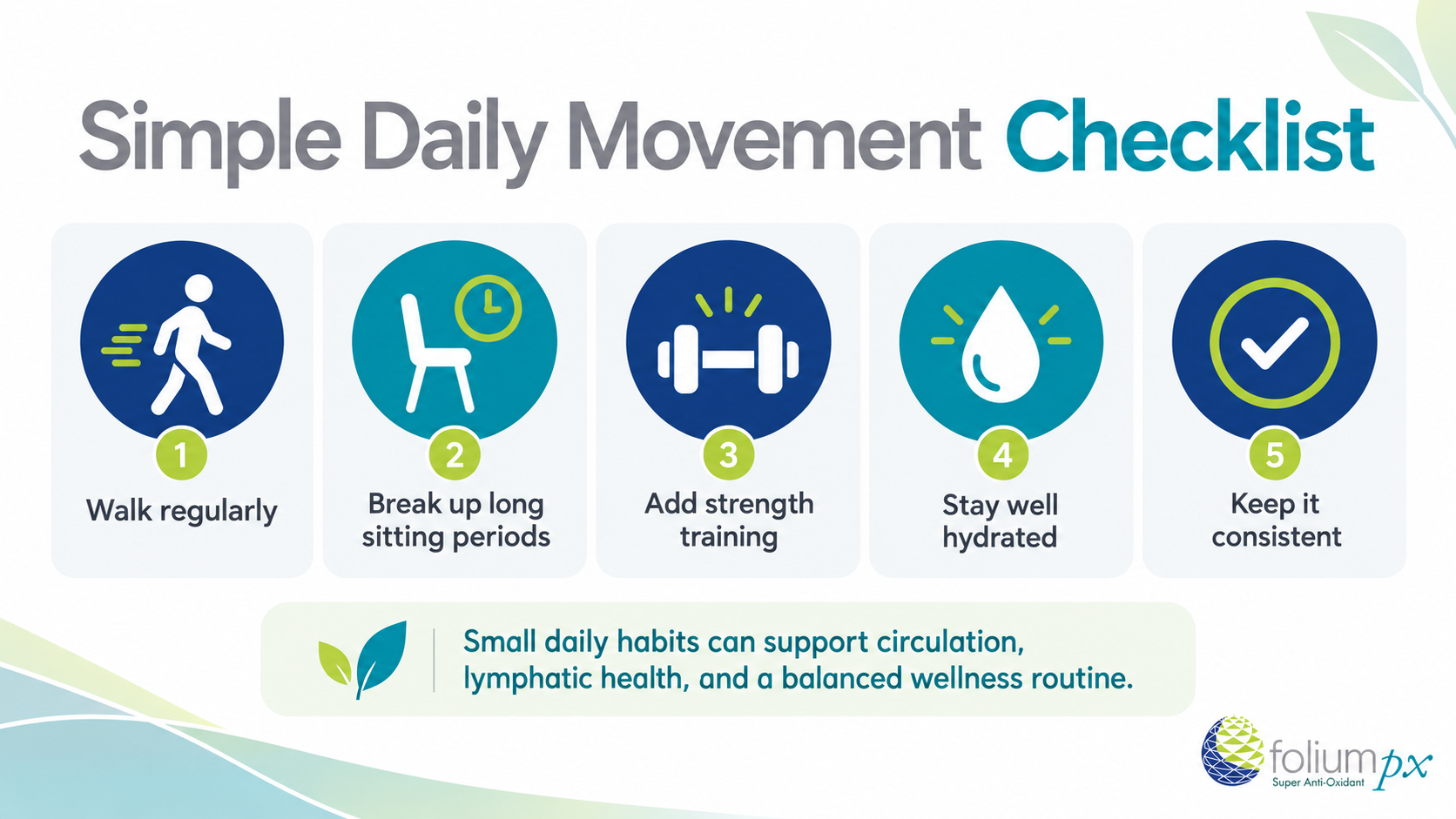
Supporting movement does not require turning every day into a high-intensity training session.
A balanced routine can include small periods of activity throughout the day.
Morning
Start with gentle mobility, stretching, or a comfortable walk if that feels appropriate for your body.
During the Day
Break up long periods of sitting by standing, walking, or changing position regularly. Short movement breaks can be easier to maintain than relying on a single long workout.
After Meals
A comfortable walk can be a simple way to add more movement to the day.
During the Week
Work gradually toward established physical activity guidelines based on your fitness level, health, and current routine.
Include both aerobic activity and strength training where appropriate. If you are returning to exercise after a long break, progress gradually rather than trying to do too much at once.
People with chronic conditions, cardiovascular concerns, lymphedema, significant mobility limitations, or other health considerations should choose activities appropriate to their circumstances and seek individualized guidance when needed.
Where Folium pX Fits Into a Movement-Focused Wellness Routine
Movement works best as one part of a broader wellness foundation.
Folium pX is a plant-based nutraceutical formulated with ingredients that include pine-derived compounds, grape seed extract, and other plant ingredients. We position Folium pX as part of a routine designed to support detoxification, antioxidant protection, immune health, and overall wellness.
That does not mean a supplement replaces the fundamentals.
Hydration, balanced nutrition, consistent movement, adequate rest, and sustainable daily habits remain essential parts of a healthy routine. Folium pX is designed to complement those foundations, not compete with them.
You can learn more about Folium pX or explore the Folium pX product page for more information.
Conclusion
Movement supports the body in practical, measurable ways. It increases circulation to active tissues, creates muscular contractions that contribute to lymph transport, helps reduce sedentary time, and supports general cardiovascular and metabolic health.
The goal does not need to be extreme exercise or maximum sweating.
Consistent walking, strength work, aerobic activity, mobility, hydration, balanced nutrition, rest, and appropriate wellness support can all contribute to a sustainable routine that supports the body’s normal functions over time.


